
What is parking lot resurfacing lifespan and when to resurface?
Quick answer: realistic lifespan range and the immediate decision
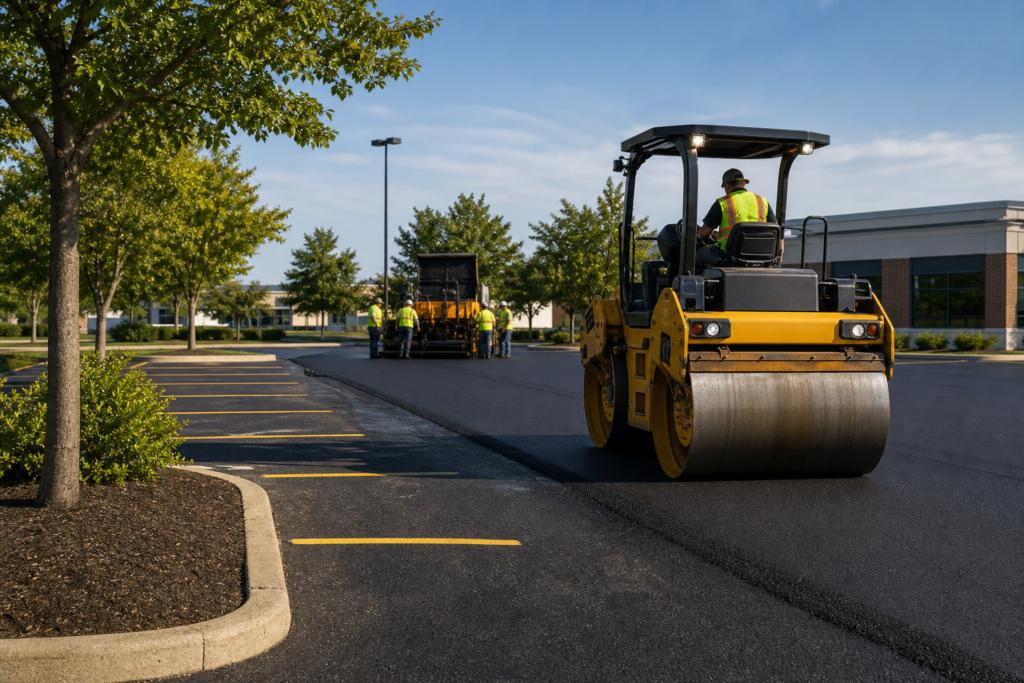
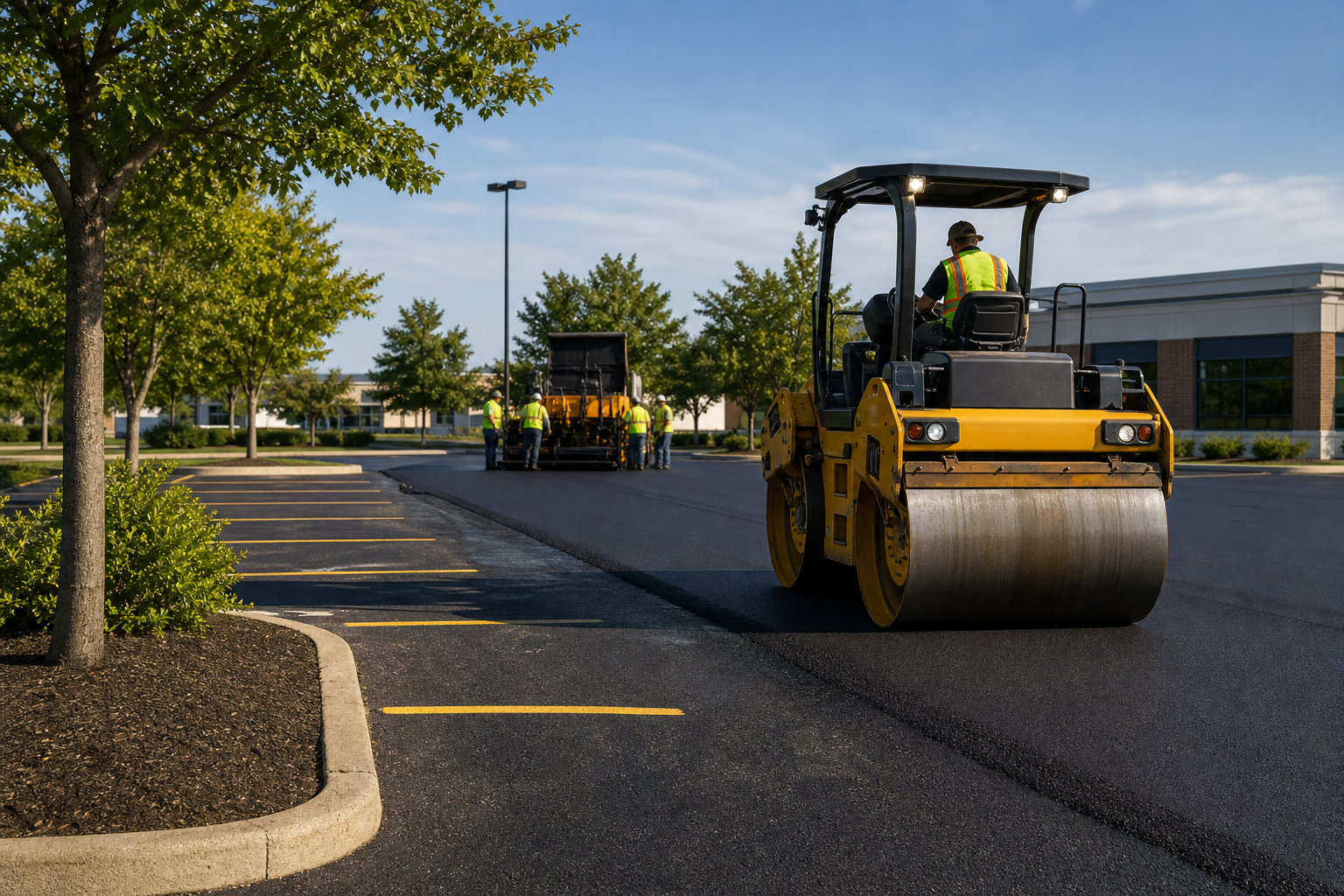
For a commercial parking lot, a properly executed asphalt resurfacing typically adds about 8 to 15 years of service life, depending on traffic, base condition, drainage, and construction quality. The upper end of that range assumes milling when required, proper base repairs, tack coat application, and correct compaction during the overlay process, plus routine maintenance afterward such as sealcoating and crack sealing. Wright Construction Company discusses the typical 8 to 15 year outcome, and the NIST/BEES lifecycle example models an initial resurfacing at about year 15 for a typical hot mix asphalt pavement. Wright Construction Company and the NIST/BEES reference these lifecycle patterns.
The single practical question property managers should ask now is: are the pavement distress and drainage problems primarily surface-level, or are they symptoms of base failure? If distress is mostly surface wear and isolated cracking, resurfacing (overlay or mill-and-overlay) will generally restore service for years. If you see deep rutting, widespread structural cracking, or poor drainage and standing water, budget for further investigation and likely full replacement.
Five warning signs that mean you should resurface now
Inspect your lot quickly for these five evidence-backed conditions. If one or more are present across significant areas, plan resurfacing or a structural evaluation soon.
- Extensive cracking: Interconnected alligator or fatigue cracking indicates the surface is failing and allowing water into lower layers. Left untreated, damage spreads rapidly.
- Rutting or wheel path deformation: Depressions in wheel paths suggest repeated load damage and can progress to structural failure if not addressed.
- Advanced oxidation and surface powdering: Faded, chalky asphalt that crumbles under light abrasion shows binder loss from UV and oxidation and reduces skid resistance.
- Potholes: Localized collapse of the surface often indicates that water has weakened the base underneath; multiple potholes frequently require more than a surface overlay.
- Standing water or drainage failures: Persistent ponding after rain accelerates deterioration and points to grading, inlet, or base issues that must be corrected prior to a lasting overlay.
These warning signs are consistent with common lists used by pavement specialists. For an expanded review of resurfacing triggers and timing, see Asphalt Coatings Company. Asphalt Coatings Company
How construction choices change resurfacing lifespan: overlay, mill-and-overlay, or full replacement
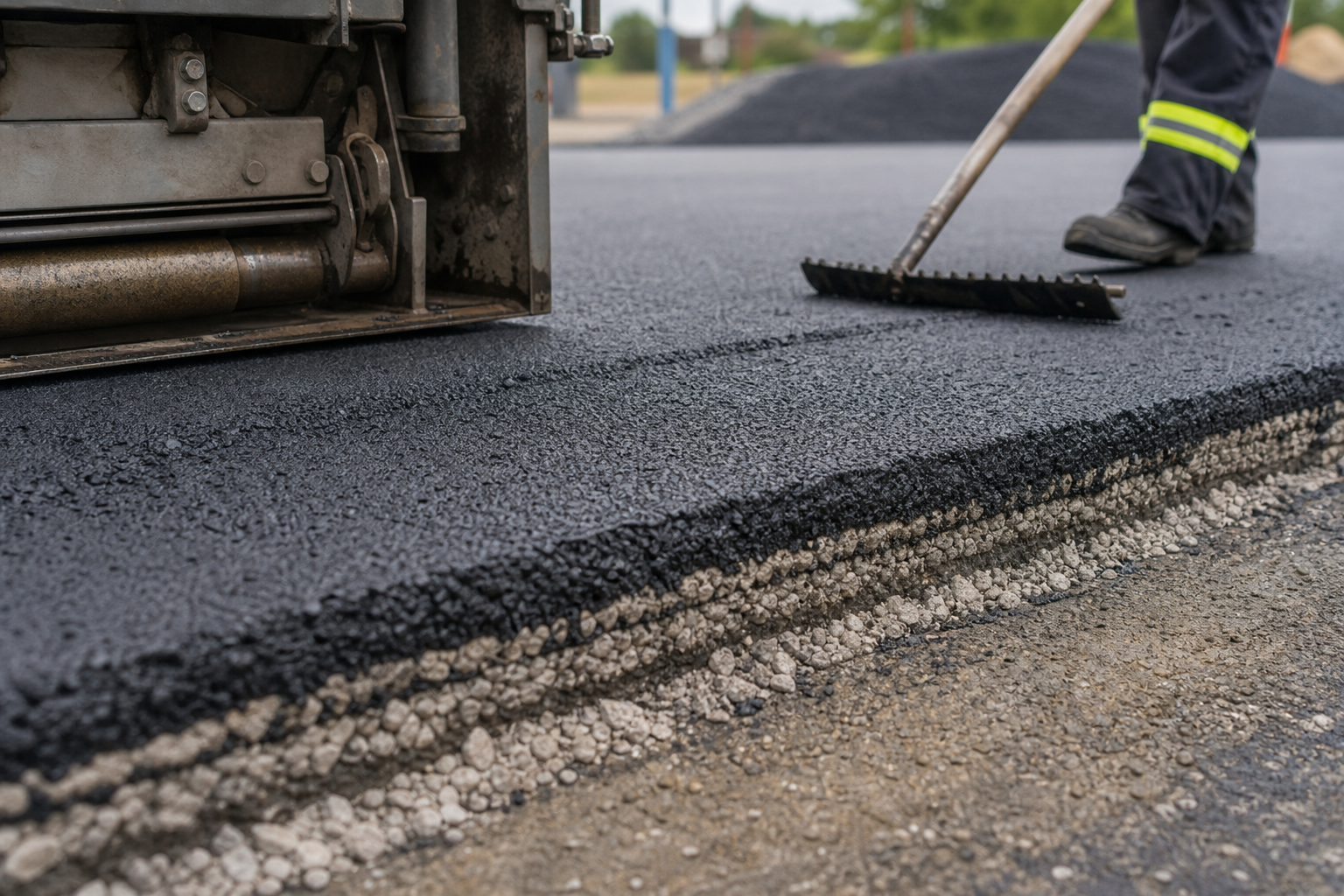
Choice of method affects both initial cost and expected lifespan. Use these criteria to match method to existing conditions and lifecycle goals.
Overlay (surface overlay without milling)
When to use it: limited surface distress, intact drainage, and a strong base. Pros: lower cost, faster. Cons: raises finished elevation, traps reflective cracking if the existing surface is already cracking, and may last toward the lower end of the 8 to 15 year range unless maintenance is rigorous.
Mill-and-overlay (remove a thin layer then overlay)
When to use it: moderate surface deterioration or when you need to reduce elevation before an overlay. Milling depth, thorough base repair, and proper tack coat application are critical to longevity. A correctly executed mill-and-overlay addresses surface irregularities and gives better bond and compaction performance, which helps reach the upper lifespan estimates cited by industry specialists. Wright Construction explains why milling depth and base repairs are among the key variables affecting service life. Wright Construction Company
Full replacement (repave)
When to use it: widespread structural failure, deep rutting, broken or heaved subgrade, or chronic drainage problems. Full replacement is the most expensive near term choice but restores structural integrity and extends life beyond what recurring overlays can achieve if the base is compromised. The NIST/BEES model treats resurfacing as periodic maintenance within a long service life only when structural integrity is preserved. NIST/BEES
Maintenance that preserves overlay life: timing and practical steps
After resurfacing, a consistent maintenance program is what moves a new overlay from the lower end of the lifespan range toward the upper end. Follow these practical intervals and actions.
- Sealcoating every 2 to 3 years: Sealcoating protects binder from UV, slows oxidation, and limits water entry into cracks that would otherwise enlarge under freeze or traffic. Industry guidance recommends this cadence; when applied, it noticeably extends overlay life. Wright Construction Company
- Prompt crack sealing: Seal cracks when they appear to stop water infiltration. Small investments in crack sealing prevent larger repairs later.
- Pothole and localized patching: Repair potholes immediately to prevent undermining of surrounding pavement.
- Regular drainage checks: Keep inlets clear, verify slope and grade, and correct areas that pond water. Good drainage reduces the need for structural repairs.
- Routine inspections: Walk the lot seasonally and after major storms to catch problems early and schedule minor repairs before they become costly.
When Georgia DOT or municipal specs change the approach
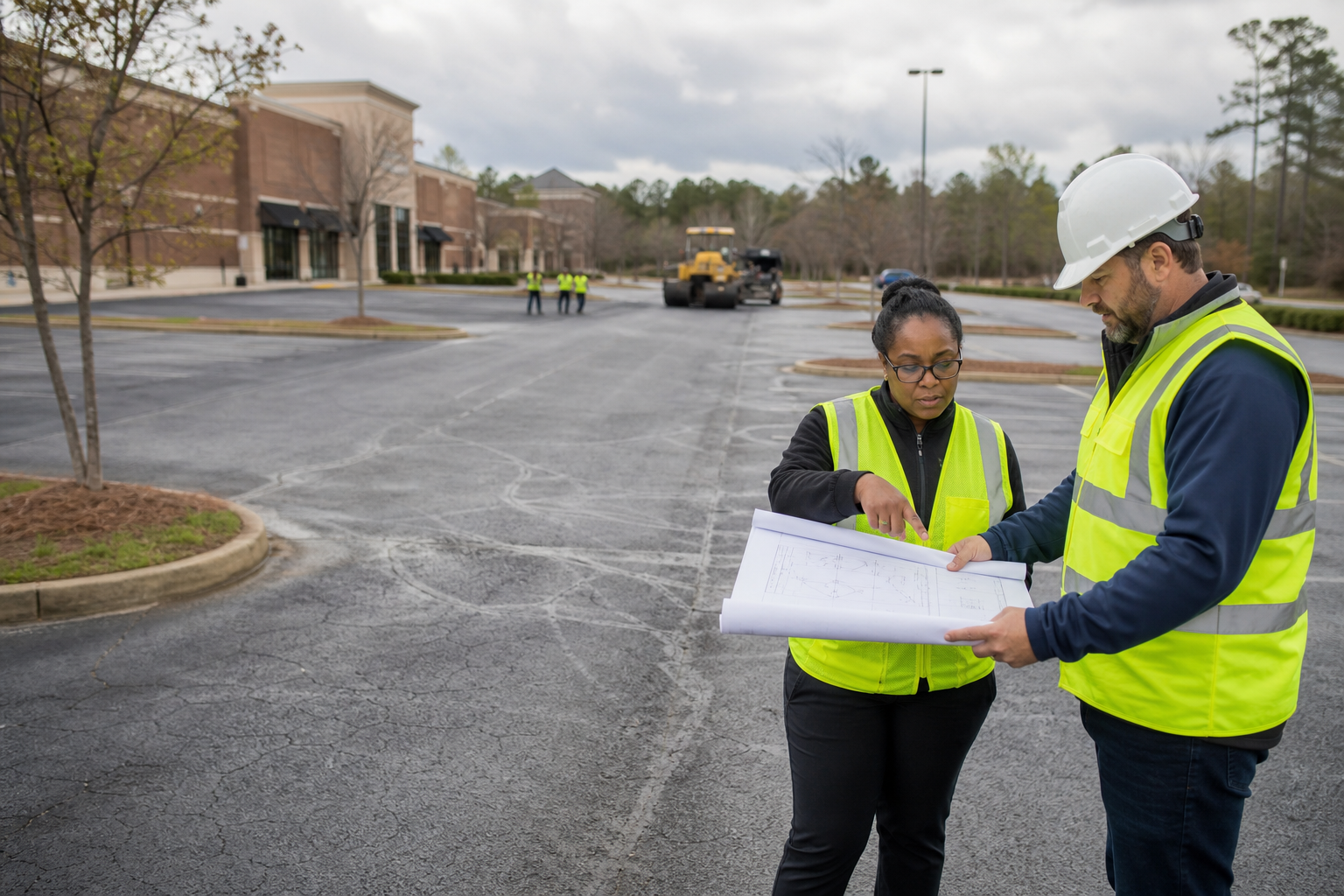
Public projects or work adjacent to state routes often require compliance with GDOT and municipal standards that affect method selection, materials, and documentation. On GDOT projects, pay attention to specified milling depths, asphalt mix designs, compaction targets, and as-built submittal requirements. Hiring a Georgia DOT certified contractor ensures the team understands those standards and can produce inspection-ready deliverables and compliant as-built documentation. DCBC LLC holds Georgia DOT certification and offers virtual deliverables such as GDOT as-built GIS submittals and roadway grade calculations to support public and municipal projects. For representative examples of related work, review the company projects. DCBC LLC and the firm’s projects page describe services and documentation capabilities.
What to expect from a GDOT-certified site work contractor and exact questions to ask
A responsible resurfacing bid should include both construction scope and the engineering documentation that preserves life and helps with future maintenance. Expect these deliverables and ask these targeted questions.
- Site assessment and documented distress mapping, including photos and annotated plans.
- Milling plan with proposed depths and areas, plus base repair scope for soft spots or undermined areas.
- Tack coat specification and quality controls for bond between lifts.
- Compaction records and density tests where required by spec.
- Recommended maintenance schedule and warranty terms for surface work.
- GDOT-compliant as-built submittals and virtual deliverables such as stakeout plans or grade calculations if the project is public.
Ask this short checklist of prioritized questions when evaluating bids:
- Are you Georgia DOT certified for roadway and paving work? If yes, request proof.
- Do you plan to mill before overlay, and what milling depth do you recommend for our lot? Ask for a written rationale.
- How will you evaluate and repair compromised base areas, and can you show similar repair examples? Request photos or project references.
- What tack coat and compaction specifications will you use, and how will quality be measured?
- What maintenance schedule do you recommend to achieve the expected lifespan, and will you provide a written maintenance plan?
DCBC LLC lists turnkey site work and virtual engineering services that help answer these questions and provide the documentation public agencies often require. See the company for examples and to request a scoped quote. DCBC LLC
A short decision checklist: resurface, repave, or further investigation
Use this compact, step-by-step checklist on site to make a budgeting and scheduling decision.
- Scan for the five warning signs. If none or only minor signs, schedule maintenance and monitor. If two or more signs are widespread, proceed to step 2.
- Confirm drainage and grade. If ponding exists, correct drainage before overlay or include drainage fixes in scope.
- Probe base condition at representative locations or request a contractor core to determine if structural failure exists.
- If base is sound and distress is surface-level, choose overlay or mill-and-overlay based on elevation and cracking. If base is compromised, plan full replacement.
- Schedule work in a low-traffic window, obtain compaction and quality control records, and agree a post-install maintenance plan with the contractor.
Balance short-term budget constraints with lifecycle cost. A cheaper overlay today that must be repeated sooner can cost more in the medium term than a correctly performed mill-and-overlay or full replacement that lasts substantially longer.
Frequently asked questions
How often should a resurfaced parking lot be sealcoated to preserve overlay life?
Sealcoat every 2 to 3 years is a common recommendation to protect binder from UV and slow oxidation. When combined with prompt crack sealing and drainage maintenance, that cadence helps move an overlay toward the upper end of its expected 8 to 15 year life. See the resurfacing and maintenance guidance referenced by industry experts. Wright Construction Company
What is the difference between an overlay and a mill-and-overlay and when is each appropriate?
An overlay places new asphalt over the existing surface without removing material and suits lots with only surface wear and good elevations. A mill-and-overlay removes a thin layer of existing pavement before placing new asphalt, which fixes elevation issues, reduces reflective cracking, and improves bonding. Milling plus proper base repair generally gives a longer-lasting result when surface distress is moderate.
When does it make more sense to repave rather than resurface a parking lot?
Choose full replacement when you observe deep rutting, extensive interconnected cracking, multiple potholes, or signs that the base or subgrade has failed. Full replacement restores structural integrity and can be more cost-effective over time for heavily damaged lots.
How does poor drainage shorten parking lot resurfacing lifespan and what fixes should be included?
Standing water accelerates binder loss and allows water to penetrate into the base, which weakens structure and speeds formation of potholes and cracks. Fixes include regrading for positive slope, repairing or adding inlets and pipework, and correcting low spots before overlay. If drainage is not fixed, any resurfacing will fail sooner.
What documentation should a GDOT-certified contractor provide with a resurfacing bid?
Expect a detailed site assessment, milling plan, base repair scope, material specifications (asphalt mix, tack coat), compaction and testing procedures, maintenance recommendations, and GDOT-compliant as-built deliverables when applicable. Firms that combine field work and virtual engineering, such as DCBC LLC, can supply the inspection-ready documentation agencies require. DCBC LLC
Ready to scope a resurfacing or get a second opinion? Contact DCBC LLC for a Georgia DOT-certified assessment, documented repair plan, and a maintenance schedule tailored to your lot. DCBC LLC