
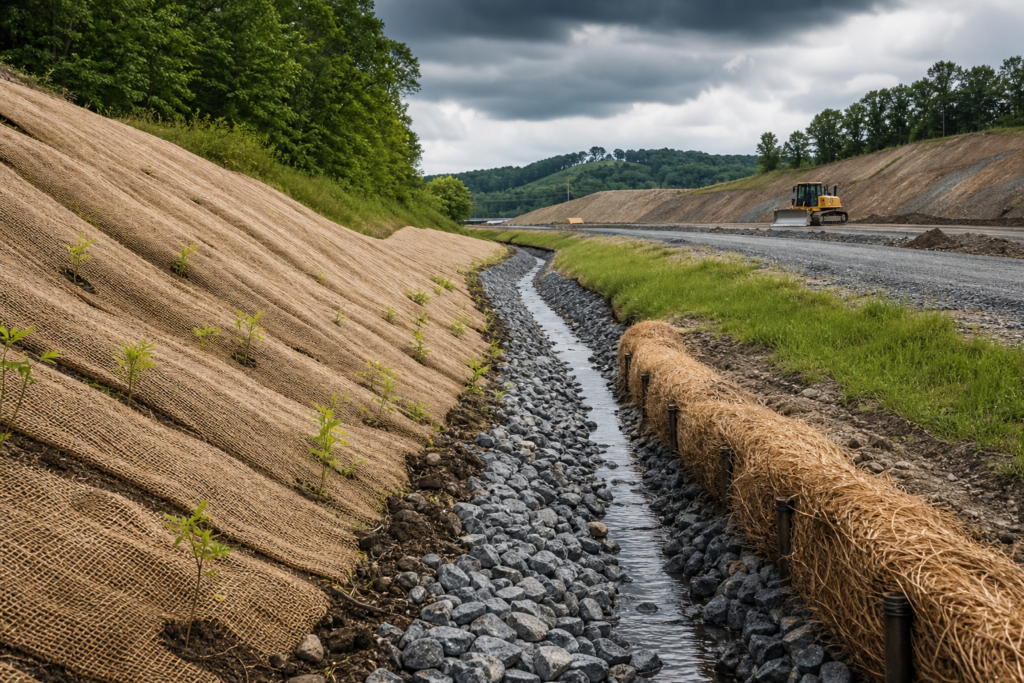
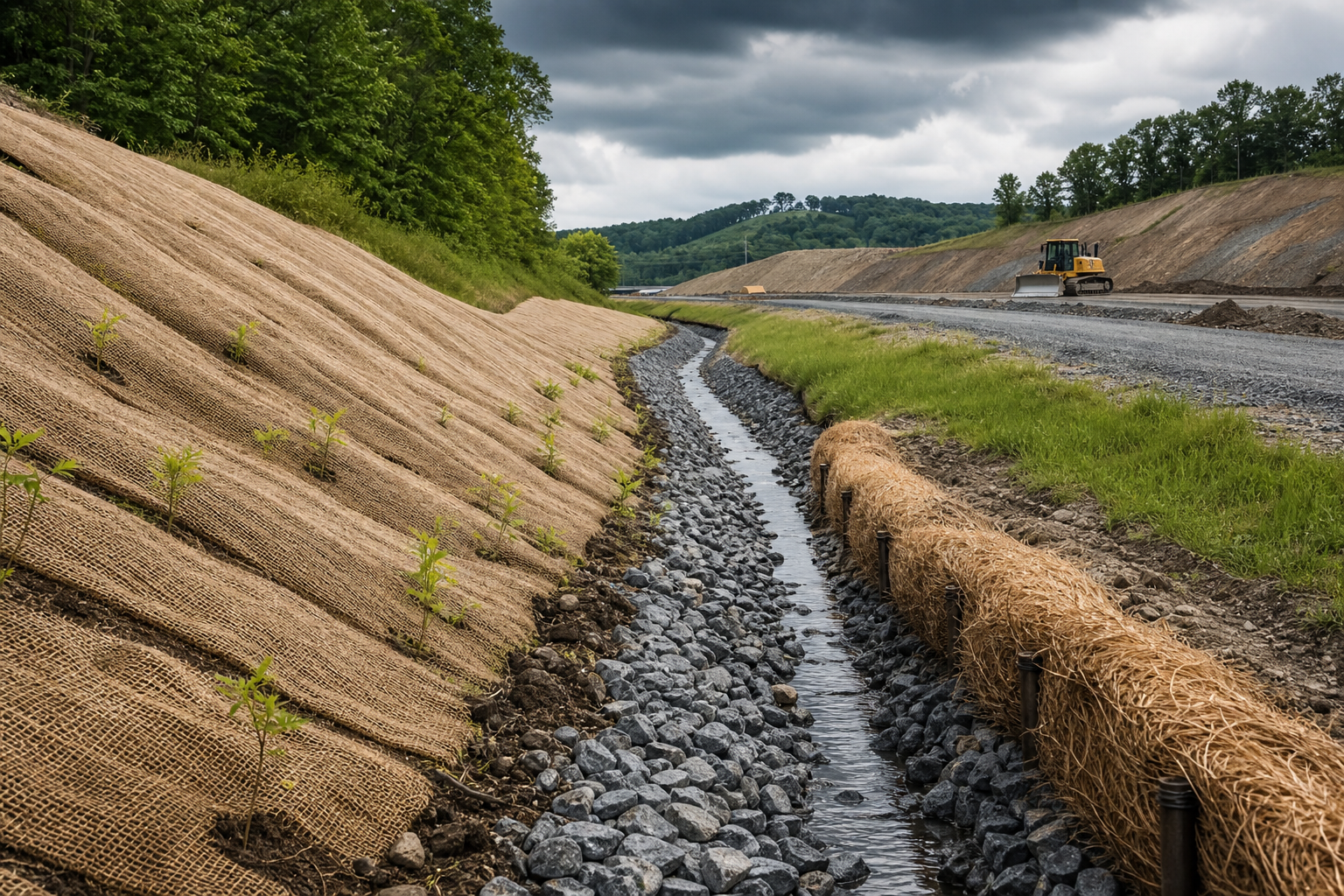
Choosing erosion control methods for construction and roadway projects
Erosion control decisions shape schedule, permit compliance, and downstream water quality on every active site. The most effective controls share a simple technical principle: surface protection that prevents raindrop impact and preserves soil cover reduces runoff initiation and increases infiltration. That principle appears in USDA soil conservation guidance and in EPA water quality practice recommendations, which explain why cover crops, mulches, and timely stabilization lower erosion risk Soil Conservation – Cover Crops, Mulches and Agricultural Management Practices for Water Quality Protection.
Quick comparison and decision matrix: temporary versus permanent measures
Use this at-a-glance matrix to shortlist treatments by the constraints project teams use most: slope steepness, soil type, drainage concentration, exposure duration, maintenance frequency, cost and complexity, and regulatory fit. State DOT toolboxes and municipal stormwater pages offer lists of approved treatments and design examples for common deficiencies Caltrans erosion control toolbox, and state DOT manuals provide lists of acceptable temporary products and techniques TxDOT erosion prevention methods.
- Slope: low slopes — seeding and mulch with perimeter capture. Moderate slopes — erosion blankets or hydromulch with anchors. Steep slopes — engineered matting or riprap for concentrated flows.
- Soil: sandy soils accept seed and hydromulch quickly. Clay soils need surface protection and staged stabilization because they resist infiltration and are prone to sloughing.
- Drainage concentration: sheet flow responds to matting and vegetation. Channelized flow requires riprap, check dams, or lined channels.
- Exposure duration: short-term (days to weeks) — silt fence, straw wattles, inlet protection. Medium-term (weeks to months) — hydromulch, erosion blankets. Permanent — turf establishment, riprap, structural armoring.
- Maintenance: low — permanent vegetation and well-designed riprap. Moderate — hydromulch with scheduled inspections. High — silt fence and traps during active grading.
- Regulatory fit: combine sediment capture with surface protection to meet inspection frequency and municipal product lists; local agencies commonly recommend this layered approach Erosion control methods.
Erosion control methods compared
Silt fence
Use case: perimeter sediment containment around disturbed areas to intercept sheet flow and trap coarse sediment.
How it works: woven or nonwoven geotextile attached to stakes forms a low barrier that ponded water must pass through, encouraging deposition of heavier particles.
Pros: low material cost, quick installation, effective for small drainage areas when combined with stabilized entrances.
Cons: not suitable for concentrated flow, vulnerable to undercutting if not trenched and backfilled, and requires frequent sediment removal to remain effective.
Installation notes: trench and backfill fabric continuously, maintain recommended overlap at joints, and inspect after every storm. Remove sediment when it reaches about one third of the fence height to avoid bypass. Municipal guidance stresses combining silt fence with inlet protection and stabilized construction entrances Control Methods.
Best fit: short-term perimeter control on mild slopes with dispersed sheet flow.
Erosion blankets and matting
Use case: immediate surface protection on slopes and newly seeded areas to reduce raindrop impact and retain seedbed conditions.
How it works: blankets of straw, coir, or synthetic fibers are anchored to the slope and hold mulch and seed in place until vegetation establishes.
Pros: rapid protection, reduced sloughing on slopes, and better seed germination than loose mulch alone.
Cons: higher material and labor cost than loose mulch; poorly anchored blankets can fail on very steep grades or under concentrated flows.
Installation notes: follow manufacturer overlap and anchor spacing, match blanket specification to slope angle and shear stress, and repair anchors after large storms.
Best fit: moderate to steep slopes where faster vegetation establishment is required and access for anchoring exists.
Hydromulch and hydroseeding
Use case: medium-term cover for large disturbed areas where quick, uniform vegetation is desired.
How it works: a slurry of seed, mulch fibers, tackifier, and fertilizers is sprayed onto soil to create a consistent protective layer that supports germination.
Pros: rapid application on large areas, good seed-to-soil contact, and tackifiers improve adhesion on slopes.
Cons: success depends on seed mix, timing, and site preparation; hydromulch is temporary until vegetation matures and should be paired with blankets on steeper slopes.
Installation notes: schedule application in an appropriate seeding window, select seed mixes suited to site conditions, and inspect for washouts and reseeding needs. Use DOT-approved products where required TxDOT guidance.
Best fit: broad, open areas with low to moderate slopes needing quick cover to limit tracking and sediment loss.
Straw mulch and tackifiers
Use case: economical surface protection for short- to medium-term stabilization and seedbed protection.
How it works: loose straw or blown wood cellulose covers seeded areas and a tackifier binds the material to the soil surface to reduce displacement.
Pros: lower cost than blankets, fast application, and effective on gentler slopes when used with tackifiers.
Cons: loose mulch can blow or wash away without tackifier; ensure mulch is certified weed-free to avoid invasive species.
Installation notes: use certified weed-free straw, apply tackifier at manufacturer rates, and combine with perimeter sediment controls downhill.
Best fit: large open areas on low slopes where budget constraints make heavier treatments impractical.
Riprap and check dams
Use case: concentrated flows at channels, culvert outlets, and slope toes where structural armoring is required to prevent scour.
How it works: placed rock or engineered structures dissipate flow energy and protect soil from erosive forces.
Pros: durable and low maintenance when properly sized and installed, effective for permanent protection of concentrated flow paths.
Cons: higher installation cost, requires engineering for sizing and filter layers, and may need repair after extreme events.
Installation notes: size rock to expected hydraulic loads, include filter fabric or graded bedding to prevent piping, and verify toe and anchor preparation. For temporary check dams, select stone or wattles sized to the expected flow.
Best fit: permanent channel protection, culvert outlets, and locations with predictable concentrated runoff.
Sediment basins, traps, and inlet protection
Use case: capture and settle suspended sediment from large disturbed areas before discharge to storm sewers or natural watercourses.
How it works: flow is slowed in a basin or trap so particles settle out. Inlet protection prevents rapid bypass of sediment into pipes.
Pros: required on many large sites, effective at managing total sediment loads when sized and maintained correctly.
Cons: basins require space, planned maintenance, and safe dewatering; they must be sized to the drainage area and expected sediment yield.
Installation notes: follow local or state design guidance for sizing and outlet design, schedule regular sediment removal, and combine basins with perimeter and slope controls to limit incoming loads.
Best fit: large developments, highway projects, and sites draining to public systems where permits demand sediment capture.
Installation and maintenance notes that affect performance
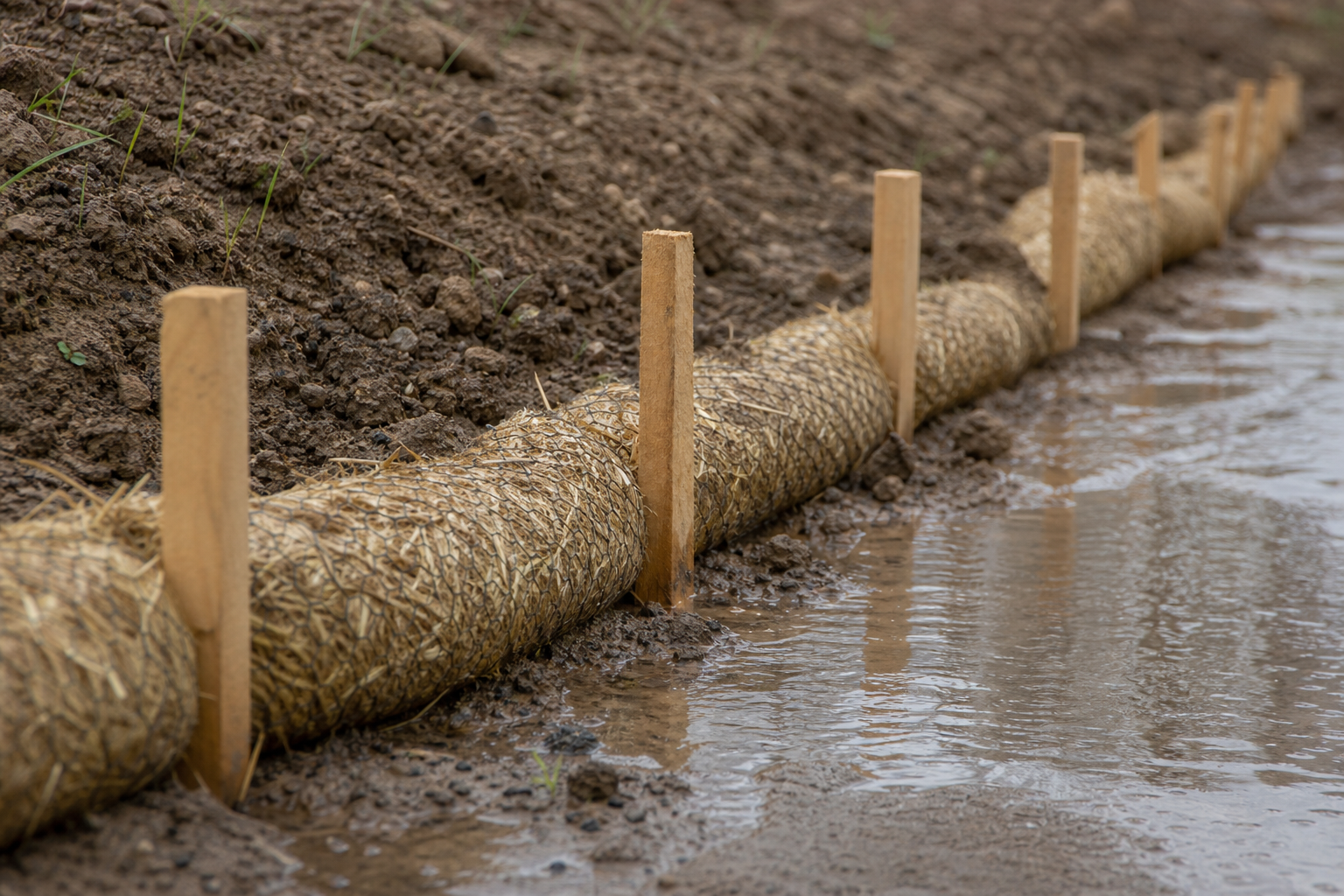
- Inspect after every significant storm and at least weekly during active grading. Record dates, failure points, repairs, and sediment volumes removed.
- Remove sediment when it reaches approximately one third of the control height for silt fences, or when basins reach their operational storage limit. Delayed removal reduces capture capacity and increases bypass risk.
- Anchor and overlap geotextiles and blankets per manufacturer guidance to resist undercutting. Common failures stem from inadequate trenching or missing staples.
- Coordinate inlet protection with temporary bypass pumping and dewatering plans to avoid sending untreated discharge into storm drains.
- Use DOT and municipal product lists to select materials that will pass review during inspections Caltrans toolbox, TxDOT methods.
Inspection checklist and GDOT and municipal compliance notes for Georgia projects
Public projects typically require documented inspections, maintenance logs, and as-built evidence for acceptance. Create an inspection report that records control type, location, installation date, observed damage, corrective action, and photos. Municipal guidance encourages combining surface protection with sediment capture for greater regulatory resilience Erosion control methods.
For projects tied to GDOT or DOT-style reviews, confirm product approvals and include deliverables that speed inspections such as stakeout plans and accurate grade calculations. Firms that combine field installation with virtual submittals and GIS as-built packages reduce reinspection cycles and document compliance more efficiently. For project coordination and deliverables, see DCBC LLC project management services project management and company capabilities DCBC LLC.
How erosion control ties to grading, stormwater systems, and virtual deliverables
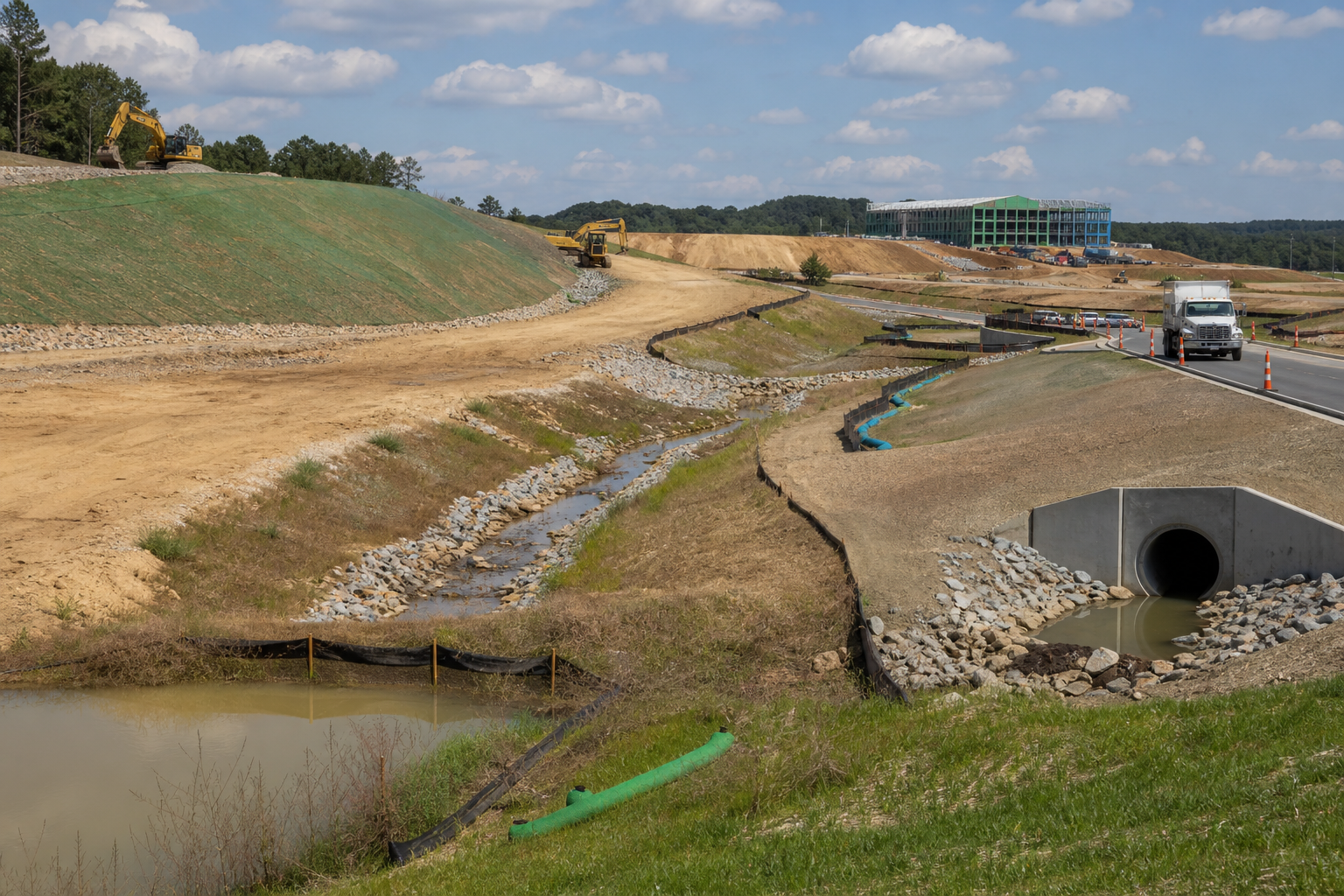
Erosion control must align with grading plans, drainage flow paths, and the location of catch basins and pipe inverts. Accurate stakeout plans, three-point level verification, and roadway grade calculations reduce the chance of control failures by ensuring diversion structures and sediment devices sit at correct elevations and slopes. When closeout requires GDOT or municipal as-built documentation, a combined field and virtual delivery model simplifies approval and reduces rework DCBC LLC.
When to hire a contractor versus using in-house crews
Hire a contractor when regulatory risk, site scale, or technical complexity exceed in-house capacity. Use these selection questions when evaluating bidders:
- Do they have DOT experience and knowledge of approved products and inspection expectations? Request examples and documentation.
- Can they provide a maintenance plan, daily inspection logs, and rapid repair response during wet weather?
- Do they offer virtual deliverables such as stakeout plans and GDOT-compliant as-built GIS submittals to speed inspections?
- Are their crews equipped for both temporary controls and permanent armoring like riprap?
For hybrid delivery options and project coordination, review contractor services under project management and confirm Georgia DOT certification where required DCBC LLC.
Printable decision checklist and next step
- Define drainage area, slope range, and soil type for each disturbed zone.
- Classify exposure duration: short, medium, or permanent.
- Match controls from the matrix: silt fence for perimeters, blankets or hydromulch for slopes, riprap for concentrated flows, basins for large-area sediment control.
- Assign inspection frequency and responsible party, and set sediment removal triggers.
- Document product approvals and include stakeout plans and as-built deliverables for permit closeout.
Key takeaway: combine surface protection with sediment capture, inspect and document performance, and plan maintenance triggers. For installation, maintenance, or combined field and virtual erosion control deliverables on Georgia projects, request a quote or discuss project coordination with DCBC LLC at their official site DCBC LLC or review their project management offerings.
Frequently asked questions
Which erosion control method is best for steep slopes on a construction site?
Erosion blankets or engineered matting anchored to the slope are usually the first choice for protecting seedbed and soil on steep slopes. Where channeling or concentrated flows are expected, pair matting with diversion swales or riprap at the toe. Follow manufacturer slope ratings and DOT toolbox guidance when selecting products Caltrans erosion control toolbox.
How long do temporary measures like silt fence and hydromulch typically remain effective during construction?
Effectiveness depends on storm exposure, site activity, and maintenance. Properly installed silt fences can function for weeks to a few months while active grading continues if inspected after storms and cleared of sediment. Hydromulch protects the surface and supports germination for a similar medium-term window until vegetation establishes. Use inspection logs and sediment removal triggers to manage performance Erosion control methods.
Do GDOT projects require specific erosion control product approvals or submittals?
State DOTs commonly maintain approved product lists and expect SWPPP documentation, inspection records, and as-built evidence. For GDOT or municipal reviews, include approved product information and consider contractors who deliver both installation and DOT-ready virtual submittals to simplify acceptance. DCBC LLC provides construction and virtual deliverables that support DOT-style documentation DCBC LLC.
How should erosion control measures be integrated with inlet and stormwater protection?
Combine perimeter and slope controls with inlet protection and sediment traps. Place inlet protection downstream of active disturbance, schedule regular cleanouts, and design basins sized for the drainage area on larger sites. Municipal guidance recommends treating both surface runoff and concentrated flows in a coordinated plan Control Methods.
What questions should I ask a contractor before hiring them to install erosion controls?
Ask about DOT experience, product approvals, inspection cadence and reporting, repair response times, sediment removal procedures, and whether they provide stakeout plans or GDOT as-built GIS submittals. Confirm Georgia DOT certification if required and request references for similar projects DCBC LLC.
Next step: For installation, maintenance, or combined field and virtual erosion control deliverables on Georgia projects, contact DCBC LLC to request a quote or to review project management options at the official website.