
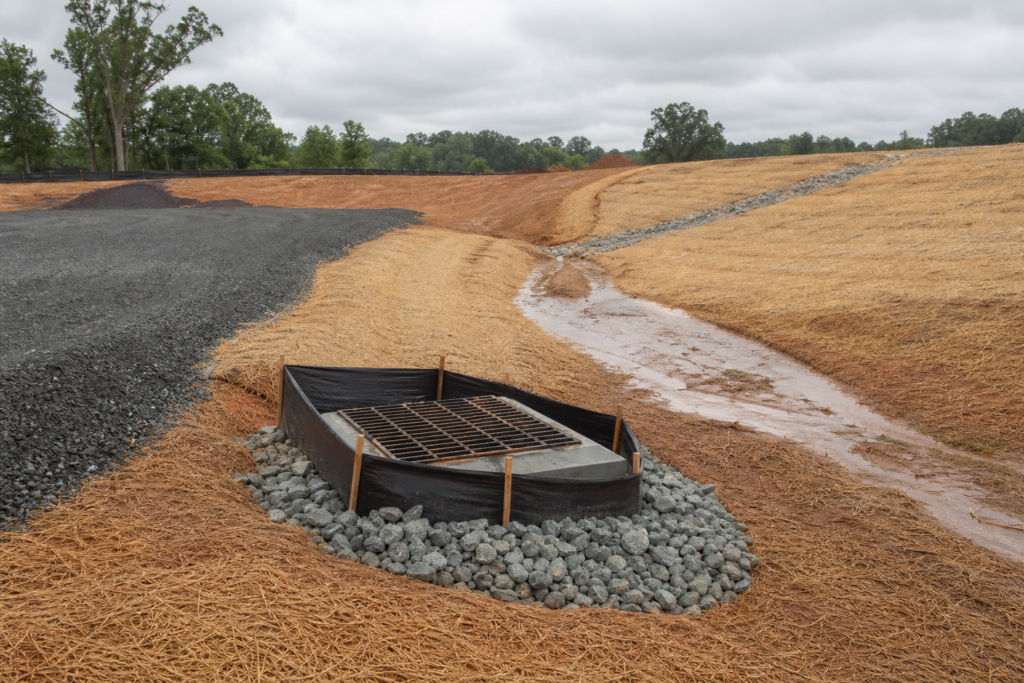
There is no single best inlet-protection method for every construction site in Bethlehem. The right BMP depends on the inlet type, expected runoff, drainage area, surrounding grades, construction sequence, and approved erosion and sediment-control plan.
Inlet protection helps prevent sediment from entering storm drains and drainage structures during land-disturbing work. It does not replace sound grading, drainage design, upstream stabilization, or regular maintenance.
Why inlet protection requires more than covering a drain
Construction exposes soil to rainfall and runoff. Without effective controls, sediment can move across disturbed areas, collect at an inlet, enter a stormwater system, or leave the project boundary. Georgia Soil and Water Conservation Commission guidance requires erosion and sediment-control protections to be consistent with the Georgia Manual for Erosion and Sediment Control and applicable permit requirements.
Protection at the inlet is only one part of a larger control system. Grading determines where water travels, drainage structures receive that flow, and upstream measures reduce the sediment reaching the structure. A control that is correctly installed but routinely overwhelmed may indicate a sequencing, stabilization, drainage-capacity, or BMP-selection problem.
Before mobilization, coordinate inlet locations, grades, drainage paths, work limits, inspection duties, and maintenance access. A site work contractor checklist can help clarify scope boundaries, field responsibilities, documentation, and closeout expectations.
Compare common inlet-protection options

The following options are useful categories for project discussions, not automatic selections. The approved plan, inlet details, flow conditions, and responsible authority determine whether a practice is suitable.
| Option | Potential setting | Strengths | Limitations and questions |
|---|---|---|---|
| Inlet sediment trap | Inlets where a sediment-collection area can be formed around the structure. | Provides a defined area for sediment to settle before water reaches the inlet. | Requires adequate space, stable construction, access for removal, and post-storm inspection. The Georgia Manual identifies Sd2 details including minimum depth, side slopes, posts, and fabric installation requirements when that practice is used. |
| Filter fabric with supporting frame | Inlet configurations where a supported fabric barrier is shown or allowed by the plan. | Can intercept sediment near the inlet and may be practical where a frame can be secured. | Fabric can clog, tear, collapse, or cause ponding. Confirm overflow handling, equipment protection, and sediment-removal procedures. |
| Curb inlet protection | Inlets along curbs, gutters, paved edges, or linear drainage paths. | Addresses runoff entering through a curb opening while preserving the paved drainage path. | Account for concentrated flow, end bypass, traffic exposure, and safe maintenance access. Do not obstruct required flow paths. |
| Block and gravel drop inlet protection | Locations with heavier flows or a need for additional overflow capacity, including certain culvert inlets. | Can provide a robust, visible structure for high-flow conditions when properly detailed. | Requires attention to stability, ponding, scour, and access. Review the official Georgia DOT detail for the relevant application. |
Do not select an option solely because it is familiar or inexpensive. Ask whether it can handle expected runoff, remain stable during the current phase, allow safe cleaning, and discharge water without damaging bypass or ponding.
Match the BMP to inlet type, flow, and construction sequence
Identify whether the structure is an area inlet, curb inlet, drop inlet, culvert inlet, or another configuration. Record its location, surrounding grades, contributing drainage area, receiving drainage path, and nearby work activities. A method suitable for a small isolated area inlet may not work where several disturbed slopes concentrate water toward one structure.
Consider the construction phase. Before final grades are established, runoff may follow temporary paths that differ from the completed drainage design. Excavation, stockpiles, haul roads, paving, utility work, and changing slopes can redirect water. Review inlet protection whenever these conditions change.
Flow is equally important. A barrier that captures sediment but blocks too much water can create ponding, bypass, erosion, or unsafe conditions. An undersized or poorly supported measure may fail when runoff increases. Heavy-flow locations may require a higher-capacity detail, overflow route, or additional upstream control.
Bethlehem pre-installation checklist
Bethlehem is the project location, but location alone does not determine the correct BMP or applicable requirements. Review these items with the project team:
- Approved documents: Identify the controlling erosion and sediment-control plan, revisions, inlet details, inspection requirements, and approving authority.
- Inlet identification: Record each inlet type, location, elevation, contributing area, and relationship to curbs, slopes, channels, roads, and buildings.
- Flow assessment: Identify runoff sources, concentrated flow, and safe overflow routes.
- Construction sequence: Coordinate installation with clearing, grading, drainage, stockpiling, utilities, paving, and stabilization.
- Upstream controls: Confirm construction entrances, silt fence, check dams, slope controls, seeding, mulching, and other required measures.
- Access: Provide a practical method for inspection and sediment removal without damaging the inlet or surrounding controls.
- Responsibilities: Name the party responsible for inspections, maintenance, photographs, corrective work, and communication.
- Records: Specify the BMP detail, materials, installation date, location, inspection form, and repair process.
Construction stormwater obligations vary by project and permit status. Review the current Georgia construction stormwater information and confirm project-specific obligations with the responsible authority or qualified project professional.
Coordinate inlet protection with upstream erosion controls
An inlet should not manage all sediment generated across a site. Stabilize exposed areas as soon as practical and sequence controls with the work. Construction entrances can limit track-out, silt fence can intercept sheet flow where appropriate, and check dams or channel measures can slow concentrated runoff.
Seeding, mulching, and erosion matting can reduce exposed soil on slopes and channels when matched to the approved plan and site conditions. These measures work best when installed at the right stage, inspected as conditions change, and maintained after rainfall.
DCBC LLC lists inlet protection, silt fence, check dams, seeding and mulching, and erosion matting among its Georgia stormwater and erosion-control capabilities. Its planning guidance also emphasizes sequencing erosion control with clearing, grading, drainage installation, stockpiling, and stabilization.
Inspection and maintenance after rainfall or site changes
Inspection frequency should follow the approved plan and applicable requirements. A practical field sequence is to inspect before forecast rainfall, after significant rainfall, and after grading, drainage, access, or stockpile changes.
Before rainfall
- Confirm the protection remains in the intended location and is stable.
- Check for tears, gaps, loose posts, displaced rock, undermining, or bypass paths.
- Remove sediment or debris that could reduce capacity.
- Confirm upstream controls and maintenance access are clear.
After rainfall
- Look for sediment accumulation, clogged fabric, overtopping, bypass, scour, ponding, and movement.
- Check whether water flowed around, beneath, or through the control.
- Remove sediment before function is compromised, and repair or replace damaged components.
- Photograph unusual conditions and record corrective action, date, location, and responsible person.
After site changes
Reinspect whenever a new slope, ditch, road, utility trench, drainage connection, or stockpile changes runoff. A catch basin or inlet that was previously low risk may receive concentrated flow after regrading. A catch basin inspection checklist can organize observations, maintenance decisions, and escalation notes.
Georgia construction stormwater requirements include timely maintenance of erosion and sediment-control measures and revisions when inspections identify necessary changes. Replacing a damaged component may not be enough if the flow path or BMP selection has changed.
Document problems and escalate the right issues
For each issue, record the date, weather, inlet identifier, photographs, sediment or blockage, ponding, bypass, undermining, damaged materials, immediate correction, and follow-up status. Include who was notified and whether the issue affects other controls or the schedule.
Routine maintenance may include removing sediment, replacing torn fabric, resetting displaced materials, or repairing a minor gap consistent with the approved detail. Escalate repeated clogging, severe ponding, structural movement, uncontrolled bypass, erosion around the inlet, or a drainage path that no longer matches the plan.
Those conditions may require plan review, engineering input, authority direction, or a broader drainage solution. Inlet protection limits sediment entry. It does not increase pipe capacity, correct an incorrect grade, or guarantee that flooding will not occur.
Check Georgia requirements before work begins
The approved erosion and sediment-control plan and applicable Georgia requirements govern the work. The Georgia Manual for Erosion and Sediment Control provides BMP details, while GSWCC technical guidance explains the relationship between state protections and the manual.
Confirm inspection, maintenance, reporting, certification, and permit responsibilities before land disturbance. Requirements depend on the person’s role and project circumstances, so verify current applicability rather than relying on a generic checklist.
What to include in an inlet-protection scope
To obtain comparable proposals, provide a marked-up site exhibit showing inlet locations, types, current grades, drainage areas where known, construction phases, and access constraints. Ask each bidder to state the proposed BMP, installation assumptions, overflow approach, maintenance frequency, inspection responsibility, cleanup method, replacement materials, documentation, exclusions, and coordination with grading and drainage.
Separate confirmed work from allowances. If the inlet type, flow, drainage area, or approved detail is unresolved, identify that condition instead of asking contractors to price an undefined solution.
Frequently Asked Questions
What is the best inlet-protection method for a Bethlehem construction site?
The best method matches the inlet, expected flow, drainage area, construction phase, maintenance access, and approved plan. No option is universally suitable.
When should inlet protection be inspected after rainfall?
Follow the approved plan and applicable requirements, with a practical check after significant rainfall and whenever runoff conditions change. Look for clogging, bypass, undermining, tears, ponding, displacement, and sediment.
Does inlet protection solve ponding or flooding around a storm drain?
Not necessarily. Ponding may result from a clogged control, inadequate capacity, incorrect grading, a blocked outlet, or a changed drainage path. Repeated or severe ponding requires drainage review.
What should be documented when inlet protection is clogged or bypassed?
Record the date, weather, inlet location, photographs, sediment or blockage, flow path, damage, correction, responsible party, notifications, and follow-up status.
Can inlet protection be changed during construction without revising the plan?
Do not assume a field substitution is acceptable. Confirm proposed changes with the responsible project professional and authority when required, and retain the decision in project records.
Conclusion: choose, inspect, and coordinate the protection
Effective inlet protection in Bethlehem starts with a project-specific decision, not a universal product choice. Match the BMP to inlet type, expected flow, drainage area, grades, construction sequence, maintenance access, and the approved Georgia plan.
Connect the inlet measure to upstream stabilization, drainage controls, inspections, maintenance, and documentation. If ponding, bypass, undermining, or repeated clogging continues, investigate the underlying drainage or sequencing issue.
For Georgia civil site work, stormwater systems, erosion control, and related construction support, DCBC LLC offers field construction and consulting services for commercial, residential subdivision, roadway, and public infrastructure projects.