


What Affects Your Parking Lot Paving Timeline and Who Controls It?
When you request a parking lot paving timeline you need realistic ranges and a method to verify them against site conditions and contractor commitments. Typical industry ranges are useful starting points: small repaves often finish in 2 to 5 days, medium lots commonly require 3 to 5 days, and large commercial projects can take several days up to one to two weeks depending on base repairs and scope. These sample ranges appear in contractor resources and planning guides, which also emphasize variable schedule drivers and necessary contingency The Paving Group FAQ, Capozzi Paving project timeline guide, Asphalt Coatings Company overview, and Richland Asphalt planning checklist.
Project phases and typical durations
Paving work usually follows a chain of phases where each step must finish before the next begins. Understanding which phase controls the schedule makes it easier to spot optimistic timelines. The usual phases and typical durations are:
- Site preparation and demolition, often 1 day for small lots and 1 to 3 days for larger sites.
- Base repair or replacement, highly variable and the most common schedule driver; minor repairs take a day or two, major base reconstruction can add several days to a week.
- Asphalt placement and compaction, typically 1 to 2 days for small lots and multiple days for large placements.
- Striping, signage, and finishing, usually completed in a single day after proper cure time for the asphalt.
- Cleanup and inspections, one day for punch list work and client or inspector signoffs.
These phase estimates reflect contractor summaries and example schedules used by paving firms and planners. Treat them as examples, not guarantees for a specific site Asphalt Coatings Company, Capozzi Paving.
Phase details and accountability
- Site prep. Tasks include milling or removal of failed asphalt, locating utilities, and protecting existing infrastructure. The contractor normally owns demolition, but the owner must confirm access and utility locates.
- Base work. Geotechnical conditions determine whether the base requires patching, reinstatement, or full reconstruction. The contractor should provide a written assessment and a scope for base repairs that ties directly to schedule impact.
- Paving. Placement depends on tonnage, equipment availability, and compaction windows. The contractor schedules delivery of hot mix and paving crews. Owners should confirm how weather or plant availability affects the start window.
- Striping and signage. Striping usually follows a short cure window for new asphalt. The striping crew may be a separate subcontractor, so verify sequencing and acceptance criteria.
- Inspections. Municipal or DOT inspections can affect final acceptance. For public projects, confirm inspection and permit timelines up front.
Six scheduling drivers to confirm in the first meeting
Before you accept a proposed parking lot paving timeline, ask targeted questions that reveal schedule risk. Each item below names the driver, explains why it matters, and shows the deliverable you should get from the contractor to reduce uncertainty.
- Base repair versus overlay. Question: “Will this job be an overlay or full-depth repair and what triggers each option?” Why it matters: base work can multiply duration and cost. Deliverable: a written base condition report and a schedule supplement listing days added for each repair level. See planning advice on base impact Platinum Paving checklist.
- Milling and demolition needs. Question: “How much milling or demo do you anticipate and how will that affect the start and cleanup plan?” Why it matters: milling adds time and requires haul-off coordination. Deliverable: a milling plan with estimated cubic yards and an equipment schedule.
- Drainage and grading fixes. Question: “Do drainage or grade corrections require additional excavation, pipe work, or inlet replacement?” Why it matters: stormwater fixes often require inspections and curing time. Deliverable: a stormwater repair scope and milestone for inspection or testing completion. Local planning checklists emphasize these items A-1 Advantage guide.
- Phasing and access constraints. Question: “Which areas must remain open and how will you phase the work to preserve access?” Why it matters: maintaining operations creates multiple phases that lengthen total project days. Deliverable: a phased access map and a day-by-day area closure plan.
- Permits and inspections. Question: “Which permits or municipal inspections are required and who will schedule them?” Why it matters: permit wait times can add days or weeks. Deliverable: a permit owner list and a permit schedule with target dates.
- Weather and seasonal demand. Question: “What contingency do you include for weather and plant availability?” Why it matters: hot mix plants and weather windows cause start delays. Deliverable: a start-window policy and contingency days spelled out in the schedule. Industry planning resources recommend adding contingency for these variables Richland Asphalt checklist.
Contractor capabilities that shorten or lengthen schedules

Contractor-side factors have a major effect on how long a job actually takes. Confirm the items below and ask the contractor to put them in writing.
- Georgia DOT certification and public project experience, which reduces rework and inspection delays on DOT or municipal jobs. DCBC LLC lists Georgia DOT certification and GDOT-ready as-built deliverables among its capabilities, which is relevant for public permitting and inspections DCBC LLC services.
- In-house crews and equipment, which usually shorten schedules versus heavy reliance on subcontractors. Ask for a crew and equipment roster and availability window.
- Virtual deliverables, such as construction stakeout plans, grade calculations, and GDOT as-built GIS submittals. These deliverables accelerate approval cycles when they meet reviewer standards. DCBC LLC advertises these hybrid construction and consulting services to reduce schedule risk project management and documentation delays.
- Clear acceptance criteria, including who signs off on completed areas and what tests or compaction records will be provided. A contractor who refuses to define acceptance milestones is a scheduling risk.
Common red flags that hide or extend time
Watch for contractor answers or missing documents that typically predict delays. If you hear any of the items below, insist on correction before you sign.
- No phasing plan but an expectation of “minimal disruption.” If operations must stay open, require a phased map and area-by-area schedule Armorproof contractor questions.
- Vague start windows such as “mid-summer” without a firm start-window policy and contingency days.
- Missing permit responsibilities, for example the contractor says “we will handle permits” without naming which permits and who pays for inspection re-tests.
- Unspecified subcontractors that will perform striping, signage, or milling. Ask for names and written scheduling commitments.
- No written procedure for base condition surprises and how change orders will affect the schedule.
What a reliable schedule deliverable should include
Ask for a schedule package you can hold a contractor to. A reliable deliverable at bid should include:
- Phased access map showing which stalls and drives close each day.
- Task-level timeline with realistic day counts for demolition, base repair, paving, striping, and cleanup.
- Contingency days and start-window policy tied to weather or plant availability.
- Acceptance milestones and required documentation such as compaction tests, tonnage delivered, and post-pave inspections.
- Permit and inspection schedule showing who is responsible for booking and paying for re-inspections.
Contractors and planners commonly use this structure to make project timelines actionable and transparent Asphalt Coatings Company timeline guide, Capozzi project examples.
How to minimize disruption while work is underway
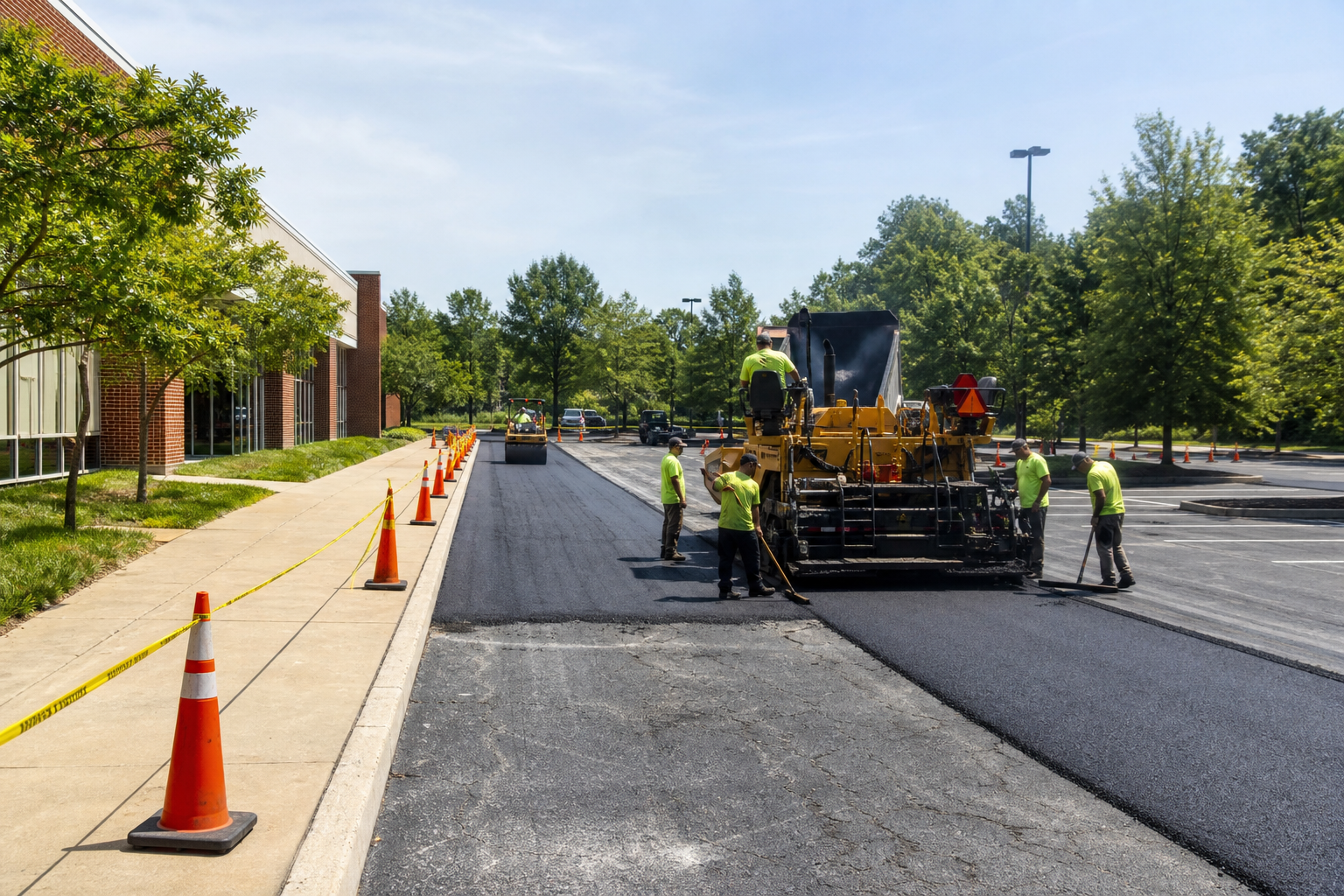
If keeping parts of the lot open is essential, negotiate the following before work begins.
- Phased work with temporary access lanes and clear signage to preserve ADA and emergency routes.
- Night or weekend shifts if acceptable, with a clear premium and noise expectations.
- Staggered deliveries and material staging off-site when possible to reduce daytime congestion.
- An agreed holdback or milestone-based payment tied to completion of each phase so owners have leverage to keep the schedule moving.
Planning resources emphasize identifying functions that cannot be disrupted before scheduling so phasing does not become a last-minute add-on A-1 Advantage guide and Platinum Paving checklist.
Local considerations for Georgia DOT and municipal projects
For projects involving state roads, turn lanes, or public infrastructure, working with a Georgia DOT certified contractor reduces common inspection and compliance delays because they understand GDOT submittal formats and inspection expectations. DCBC LLC lists Georgia DOT certification, GDOT as-built GIS submittals, and stakeout and grade calculation services among its offerings, which helps streamline DOT and municipal reviews for infrastructure work DCBC LLC services and project management.
Exact questions to ask a contractor on day one
Use this short checklist in your first meeting or pre-bid request to surface schedule risk and secure written deliverables.
- Do you recommend overlay or full-depth repair, and what drives that decision?
- Can you provide a written base condition report and the days added for each repair scenario?
- What phasing plan keeps required access open, and can you show daily area closures?
- Which permits and inspections are required, who schedules them, and what are the target dates?
- What start-window do you propose, and how many contingency days are included for weather and plant delays?
- Who will provide compaction or density testing and final acceptance documentation?
- Do you have GDOT experience and can you supply GDOT-format as-built deliverables if needed?
Frequently asked questions
How long does parking lot paving typically take for small, medium, and large lots?
Typical ranges are: small lots 2 to 5 days, medium lots 3 to 5 days, and large commercial projects several days up to one to two weeks depending on base repairs and scope. These ranges come from industry contractor FAQs and project timeline examples and should be used as starting points for an on-site estimate The Paving Group FAQ, Capozzi Paving examples.
What site conditions add the most time to a parking lot paving timeline?
Extensive base failure requiring full-depth repair, unresolved drainage or stormwater repairs, complex utility work, or strict phasing to maintain operations are the biggest time drivers. Permit and inspection waits also add days or weeks when municipal or DOT approvals are required Platinum Paving checklist.
Can I keep part of my parking lot open during paving and how does that affect schedule?
Yes, you can keep parts open with a phased plan, but every retained access area usually increases total project days because work is split into multiple mobilizations. Require a phased access map and a day-by-day closure schedule before signing.
How do I verify a contractor’s timeline will be honored and what milestones should be in the contract?
Insist on a task-level schedule, contingency days, acceptance milestones linked to testing or inspections, and a start-window policy. Include holdbacks or milestone payments so funds align with completed phases. Request proof of in-house crews or named subcontractors and their availability.
Will choosing a Georgia DOT certified contractor shorten permitting or inspection delays for public projects?
Working with a Georgia DOT certified contractor increases the chance that submittals and as-built deliverables meet GDOT expectations, which typically reduces back-and-forth and rework on public projects. Confirm the contractor will deliver GDOT-ready as-built GIS files and stakeout plans if your project requires them DCBC LLC services.
If you are planning a paving project in Georgia and need a scoped schedule, request a phased timeline and quote from a Georgia DOT certified contractor who provides both field execution and virtual deliverables for inspections and as-builts. For project planning and a scoped timeline request, see DCBC LLC project management and contact options project management or visit DCBC LLC.