
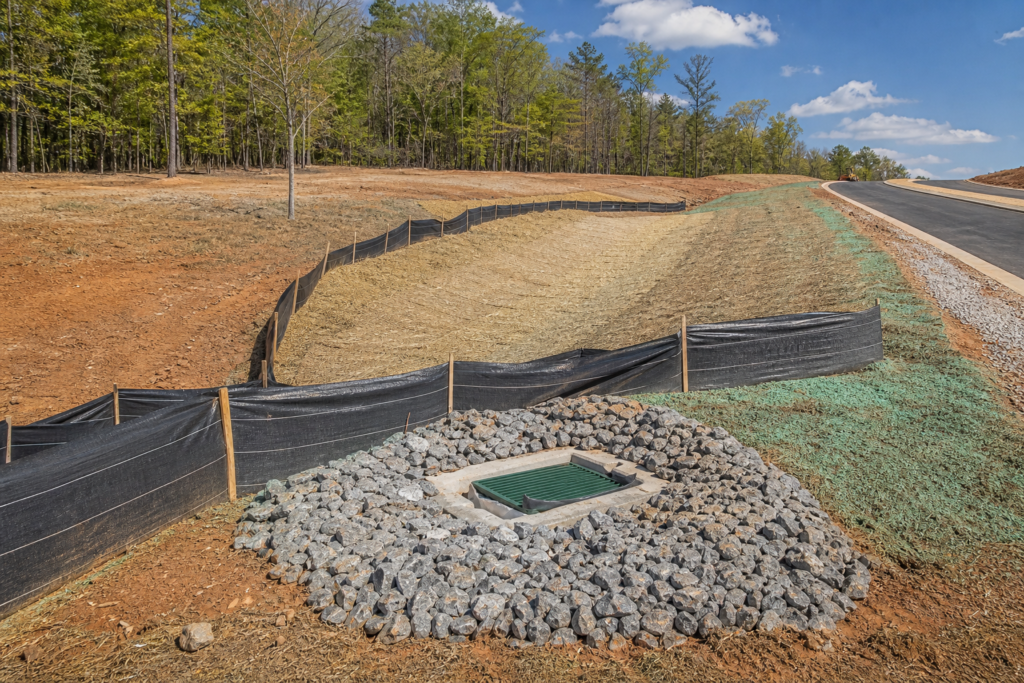
Effective erosion control is not a single product or installation. It is a coordinated system that limits soil disturbance, manages runoff, captures sediment, protects drainage infrastructure, and stabilizes the finished site. For construction and roadway projects, the right combination depends on slopes, drainage paths, construction sequence, soil exposure, and final land use.
Georgia projects must also follow applicable plans, permits, best management practices, and state requirements. The Georgia Soil and Water Conservation Commission’s erosion and sediment control program provides official context for land-disturbing activities and BMPs.
Key Takeaways
- Effective erosion control requires a coordinated system tailored to site conditions.
- Georgia projects must adhere to state-specific plans and best management practices.
- Temporary controls should be integrated with final stabilization measures for best results.
- Regular inspection and maintenance are crucial for the effectiveness of erosion control measures.
- Understanding water movement and soil exposure is key to selecting appropriate strategies.
Quick summary

- Control exposed soil and runoff at the source before relying on perimeter or inlet devices.
- Match controls to conditions: slopes may need surface stabilization, while concentrated flow may require designed drainage measures.
- Use silt fence and inlet protection as parts of a broader system, not substitutes for upstream erosion control.
- Coordinate temporary controls with final stabilization such as seeding, mulching, erosion matting, or revegetation.
- Plan inspection, maintenance, weather response, and closeout documentation before construction begins.
How to choose erosion control strategies
Start with five questions: Where is soil exposed? How does water move across the site? Is flow dispersed or concentrated? How long will each area remain disturbed? What will the final surface be used for?
These questions prevent a common mistake: selecting BMPs independently instead of designing a connected system. A slope may need surface protection, a downstream inlet may need secondary sediment control, and the construction sequence may need to limit how much of the slope is exposed at once. Effective earthwork, grading and erosion control planning brings those decisions together with drainage, inspections, and closeout requirements.
1. Control soil disturbance at the source

The most direct erosion control strategy is to disturb only the soil that the project can actively protect. Phased clearing and grading, defined work limits, stabilized access, and prompt final grading reduce the amount of exposed soil available for runoff to carry away.
Coordinate earthwork with drainage installation and stabilization rather than opening large areas long before they are needed. Phased work may require more planning and equipment movement, but uncontrolled exposure can create greater maintenance, sediment, and schedule problems.
2. Stabilize exposed slopes and soil surfaces
Exposed slopes need protection suited to their grade, drainage, soil condition, exposure period, and intended final use.
Seeding and mulching
Seeding and mulching can protect disturbed soil while vegetation establishes. This approach is most useful where the area can support vegetation and the construction sequence allows the surface to remain undisturbed long enough for growth to develop.
Erosion matting
Erosion matting provides additional surface protection where runoff could move exposed soil. Selection and installation should account for slope, drainage, soil, anchoring, and project requirements. Matting is not automatically suitable for every slope, particularly where runoff is concentrated or the underlying grade is unstable.
Revegetation
For areas that will remain unpaved, erosion control revegetation can provide longer-term ground cover alongside temporary measures. Coordinate it with final grades, soil conditions, drainage, and construction timing. Vegetation supports broader erosion control, but it does not replace measures needed during active earthwork.
3. Contain sediment along site edges
Silt fence and similar perimeter controls can intercept sediment before it leaves a disturbed area. Placement should reflect the site boundary, drainage patterns, slope direction, adjacent properties, and nearby waters or drainage infrastructure.
Perimeter controls do not prevent soil from eroding upslope, safely convey concentrated runoff, or replace stabilization of exposed surfaces. They also require inspection and maintenance access. Use them as one layer in a wider plan that includes source control, slope stabilization, drainage management, and sediment containment.
4. Protect drainage inlets without blocking the system
Inlet protection helps limit sediment entering stormwater inlets, but it is a secondary sediment control. Pair it with upstream erosion controls, perimeter measures, and sediment traps where appropriate. Relying on an inlet device alone can move the problem downstream or create unsafe ponding.
Before installation, confirm the inlet configuration, contributing drainage area, maintenance access, and intended bypass or overflow path. Secure the device according to applicable project requirements and keep the inlet functional enough to manage runoff. Record the installation date, location, device information, and inspection observations when documentation is required. Review the details of inlet protection when planning this part of the system.
5. Manage concentrated runoff with appropriate flow controls
Dispersed sheet flow and concentrated channel flow create different erosion risks. Where water collects and accelerates, strategies may include check dams, flumes, spillways, slope drains, or other stormwater measures selected for the project’s design and flow conditions.
These controls should not be chosen from universal dimensions or configurations. Grade, drainage area, soil, outlet conditions, construction stage, and project plans all affect the appropriate solution. A poorly matched flow control can increase scour, redirect water toward an unprotected slope, or interfere with access.
6. Coordinate controls during roadway and utility work
Roadway construction, utility installation, and grading often expose long corridors, shoulders, embankments, trenches, and drainage paths in stages. The erosion control strategy should follow that sequence rather than treating the entire corridor as one uniform surface.
Install or protect drainage facilities as work advances, stabilize exposed shoulders and slopes, and maintain equipment access without creating uncontrolled runoff paths. Utility trenches may need prompt backfill and surface stabilization, while roadway work requires coordination between traffic access, stockpiles, drainage, and temporary slopes.
Erosion control strategies compared by site condition
| Strategy | Best-fit condition | Primary role | Key limitation |
|---|---|---|---|
| Phased grading | Areas that can be disturbed in stages | Reduces exposed soil | Requires disciplined sequencing |
| Seeding and mulching | Disturbed soil that supports vegetation | Protects soil during establishment | Needs suitable conditions and time |
| Erosion matting | Exposed slopes needing added protection | Limits surface movement | Must suit slope and drainage conditions |
| Silt fence | Selected perimeter or downslope areas | Intercepts sediment | Does not control source erosion or concentrated flow |
| Inlet protection | Drainage inlets receiving disturbed runoff | Reduces sediment entering inlets | Requires upstream controls and maintenance |
| Check dams and flow controls | Appropriate concentrated drainage paths | Manages runoff energy | Requires site-specific selection |
| Revegetation | Areas intended to remain unpaved | Creates longer-term ground cover | Does not replace active-construction controls |
Georgia planning and compliance considerations
Georgia’s technical guidance states that erosion and sediment protections should use sound conservation and engineering practices consistent with applicable requirements. The Georgia Environmental Protection Division provides plan checklists, NPDES construction stormwater information, and BMP guidance for construction activities.
Requirements can vary with the project, land-disturbing activity, receiving waters, jurisdiction, and applicable permit or plan. Use current official materials rather than relying on a generic checklist. For transportation work, follow the project plans and applicable Georgia requirements. This article is educational, not a permit determination or project-specific design.
Erosion control planning checklist
- Define clearing, grading, staging, access, and stockpile limits.
- Review topography, final grades, drainage paths, inlets, outlets, slopes, and concentrated-flow areas.
- Identify areas that will remain temporarily exposed and those receiving permanent stabilization.
- Sequence earthwork, drainage, utility work, paving, and stabilization to reduce uncontrolled exposure.
- Match source controls, slope protection, perimeter measures, inlet protection, and flow controls to site conditions.
- Assign inspection and maintenance responsibilities, including access to devices and accumulated sediment.
- Establish a weather-response process for damaged controls, new rills, blocked inlets, and bypassed runoff.
- Document inspections, repairs, material information, photographs, testing, and required reports.
- Confirm final stabilization and required closeout records before demobilization.
When to use in-house, contractor, or hybrid support
In-house management may suit a small, familiar project where the team understands applicable requirements, has inspection capacity, and can maintain controls promptly. Complex grading, roadway, drainage, utility, or public-infrastructure work may require specialized construction resources and coordinated documentation.
A hybrid model can combine owner oversight with contractor field work and virtual support for planning, stakeout, grade calculations, estimates, or documentation. The right choice depends on project complexity, internal expertise, required deliverables, and responsibility for maintaining controls.
DCBC LLC’s verified capabilities include earthwork and grading, stormwater systems, erosion control, and related planning and documentation. Its listed erosion-control scope includes silt fence, seeding and mulching, inlet protection, check dams, and erosion matting for Georgia projects.
Frequently asked questions
Is inlet protection enough to control erosion on a construction site?
No. Inlet protection is a secondary sediment control. Combine it with upstream erosion controls, perimeter measures, slope stabilization, and appropriate sediment management.
How do temporary erosion controls differ from permanent stabilization?
Temporary controls manage risk while construction continues, such as silt fence, inlet protection, temporary seeding, or matting. Permanent stabilization addresses the intended final condition through established vegetation, completed pavement, finished drainage, or another approved surface.
When should revegetation be included in an erosion control plan?
Include revegetation when disturbed areas will remain unpaved and the final use supports vegetation. Plan it around final grades, soil preparation, drainage, weather, and construction timing.
Which strategies are relevant to roadway and grading projects?
Roadway and grading projects commonly require phased earthwork, slope stabilization, drainage management, sediment containment, inlet protection, concentrated-flow controls, and final stabilization. The combination depends on project plans, grades, drainage paths, construction sequence, and applicable Georgia requirements.
Conclusion
The strongest erosion control strategy starts before soil is disturbed. Limit exposed areas, understand how water will move, coordinate grading with drainage, and select controls that work together. Silt fence, inlet protection, matting, seeding, check dams, and revegetation each have a role, but none is a universal solution.
For Georgia developers, contractors, engineers, and public agencies, DCBC LLC provides civil site work, earthwork and grading, stormwater, erosion-control, and related consulting support. Request project information or a quote from DCBC LLC.