
Asphalt milling process: what to expect on site
Asphalt milling is a common pavement rehabilitation method that removes the existing asphalt surface to a controlled depth so a new overlay can be placed. This article walks through the asphalt milling process step by step, explains when milling is the right choice, outlines the operational sequence you will see on site, and lists the specific deliverables and verifications owners and public agencies should request from a site work contractor on Georgia projects.
What asphalt milling is and when it is the right rehabilitation choice
Milling, sometimes called pavement milling or cold planing, removes the top layer of an asphalt pavement at specified depths and widths to restore a smooth profile and provide a textured bonding surface for a new asphalt overlay. DOT guidance describes milling as the removal of pavement at locations, depths, widths, and typical sections indicated in contract documents or as directed by the engineer, noting that milling typically consumes less energy than alternative removal methods and that the reclaimed material may be reused when approved by the engineer or DOT (NCDOT construction manual).
Milling is appropriate when the surface shows ride-quality problems, rutting limited to the wearing course, or localized surface distress but the structural base and binder layers remain sound. Industry sources emphasize that milling is not the right solution when the pavement base has failed, when the existing section is too thin to mill without compromising structure, or when extensive alligator cracking spans the area; in those situations full-depth reconstruction or stronger repair methods are necessary (contractor guide) and (technical DOT report).
Prework you should expect before the milling crew arrives
Before milling begins, the contractor or engineer will perform site surveying, establish cut lines, and typically take test cores to confirm existing layer thickness. Practical contractor guides list the usual prework steps as stakeout, utility locates, identifying drainage inlets, and marking the exact milling limits and transitions (process steps). Ask to see the survey stakes, any test-core results, and the proposed milling depth plan before work starts.
On public or DOT projects, prework may also include permit submittals and a traffic control plan that reflects state requirements. On private commercial sites, the owner should confirm who will handle utility locates and whether any sensitive features, such as landscaping or adjacent concrete, require protective measures. For Georgia DOT or municipal projects, confirm the contractor’s GDOT certification and their stated method for submitting as-built documentation (DCBC LLC).
Traffic control, safety, and site logistics during milling

Milling operations require a controlled work zone. Expect a temporary traffic control setup with cones, signs, flaggers, and signed detours for vehicles and pedestrians when necessary. Crews often phase lane closures to maintain access for the public and emergency vehicles while they work through each segment. The contractor should provide a written traffic control plan for review before mobilization.
Operational impacts include noise, vibration, and dust while the milling machine removes asphalt. A continuous milling operation may run quieter than some other heavy construction, but it still produces noise and visible milling residue until the sweeper follows. Industry checklists tell owners to expect short access interruptions and to arrange deliveries and customer notifications around the planned closures (site workflow).
Milling depth setting and how the milling train operates
Depth selection is a critical design decision. Typical shallow mills remove the top 1.5 to 3 inches to eliminate surface defects and create a fresh texture for overlay, while deeper mills remove thicker sections when necessary or when removing previous overlay lifts. Contractor guidance and DOT manuals describe the depth and limits as contract-controlled items that an engineer or inspector must approve before and during the cut (industry guide) and (NCDOT manual).
Setting milling depth and profile tolerances
Engineers set depths and profile tolerances based on cross slopes, crown, drainage, and the thickness of the existing pavement. For crowned roadways, the milling plan typically maintains cross slope while removing a prescribed depth from the crown and outside lanes. Field verification is usually done with grade rails, a 3-point level check, or a surveying instrument. Request to see the proposed profile tolerances and the method the contractor will use to verify depth in the field.
The milling train sequence: what each machine does
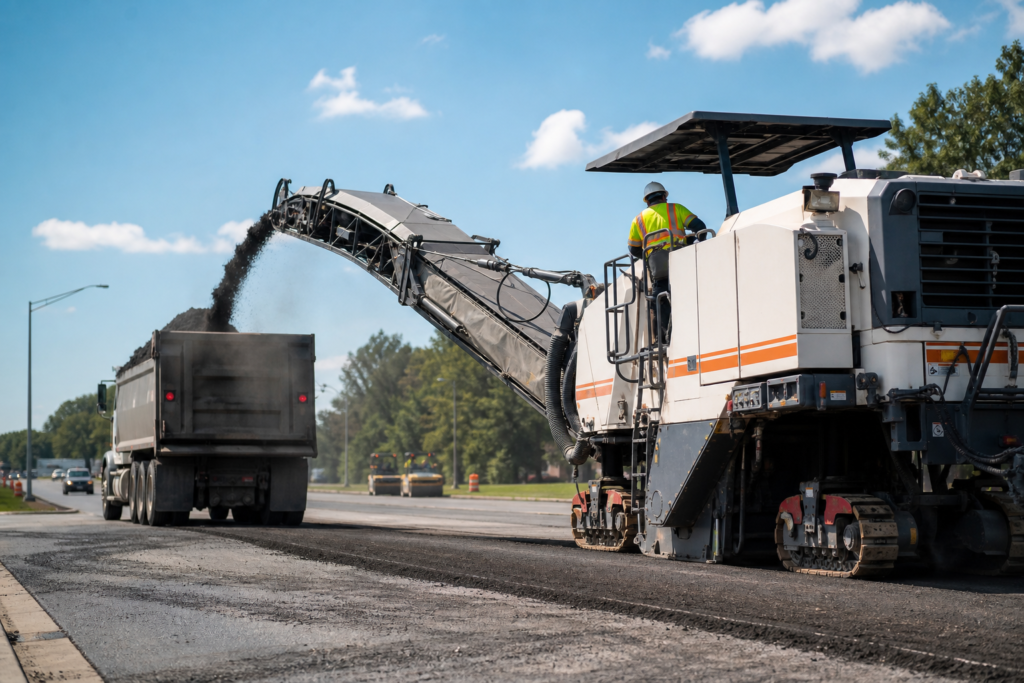
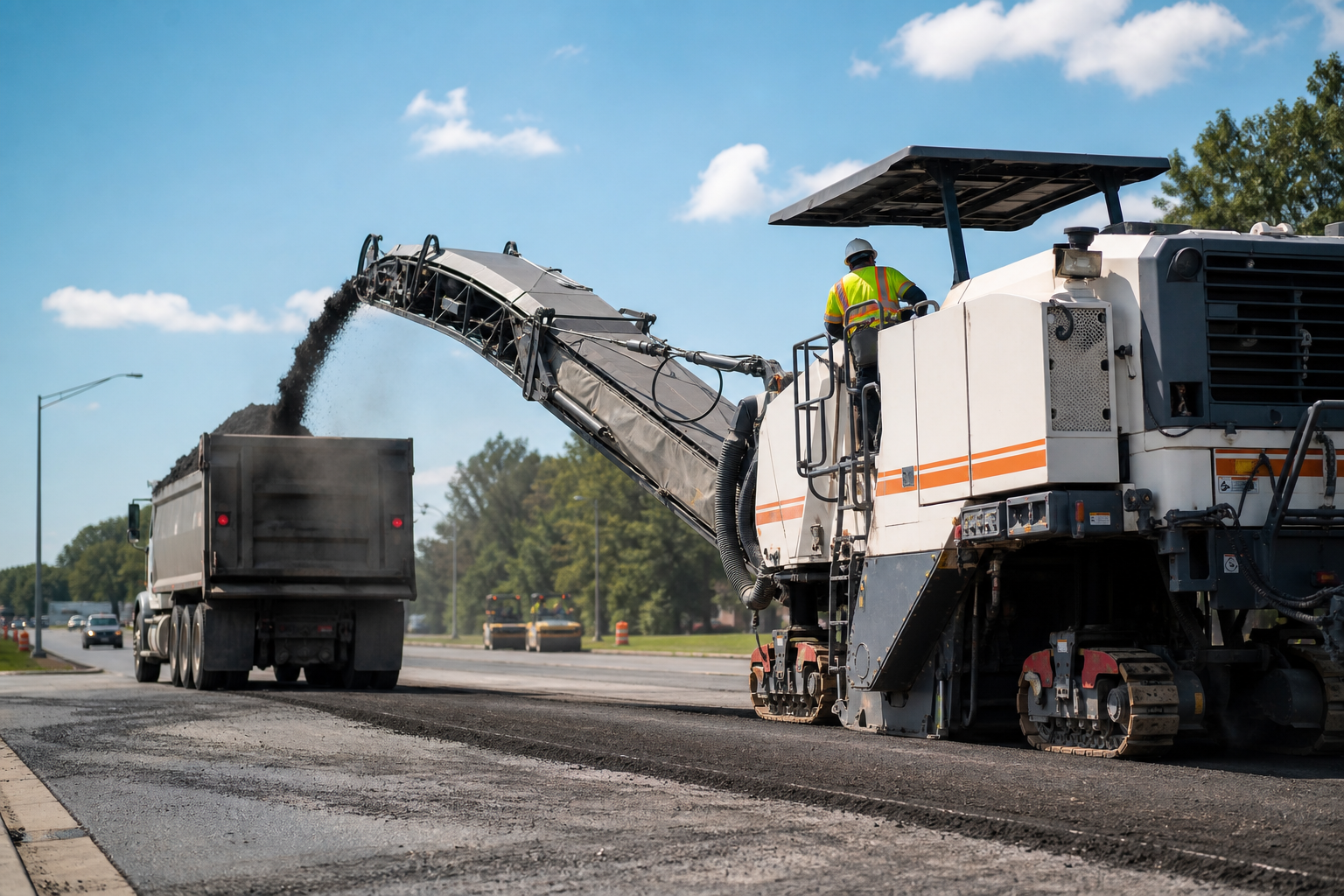
Milling is typically performed as a continuous train. The milling machine cuts the asphalt with a rotating drum, a conveyor transfers milled material into haul trucks, and a sweeper follows to clean the profile so the surface is ready for grade checks and, if planned, immediate overlay. Contractor descriptions emphasize the machine train because it minimizes rehandling and keeps the site clean, which reduces downtime between milling and paving (operation overview).
Milled material handling, hauling, and recycling options
Milled asphalt, often called reclaimed asphalt pavement or RAP, may be stockpiled for reuse, hauled to an asphalt plant for recycling, or removed from the site for disposal. DOT guidance indicates that milled material can often be reused in hot mix asphalt or, after testing and approval, incorporated into aggregate base course material (NCDOT manual). Practical guides advise owners to ask the contractor for a disposal or reuse plan and any required test results before reuse is accepted (property manager guide).
Hauling logistics matter. The milling train requires a steady flow of haul trucks to remove milled material. If you need a contractor-supplied haul vehicle, inspect how trucks will enter and exit the site to avoid contamination of neighboring areas. For projects requiring local hauling capacity, contractors may list equipment or offer truck rental options; see a typical haul vehicle description on a contractor dump truck page (dump truck). Ask for the intended haul route, staging area, and hours of truck traffic to reduce community impact.
Surface cleanup, grade verification, and site deliverables to request
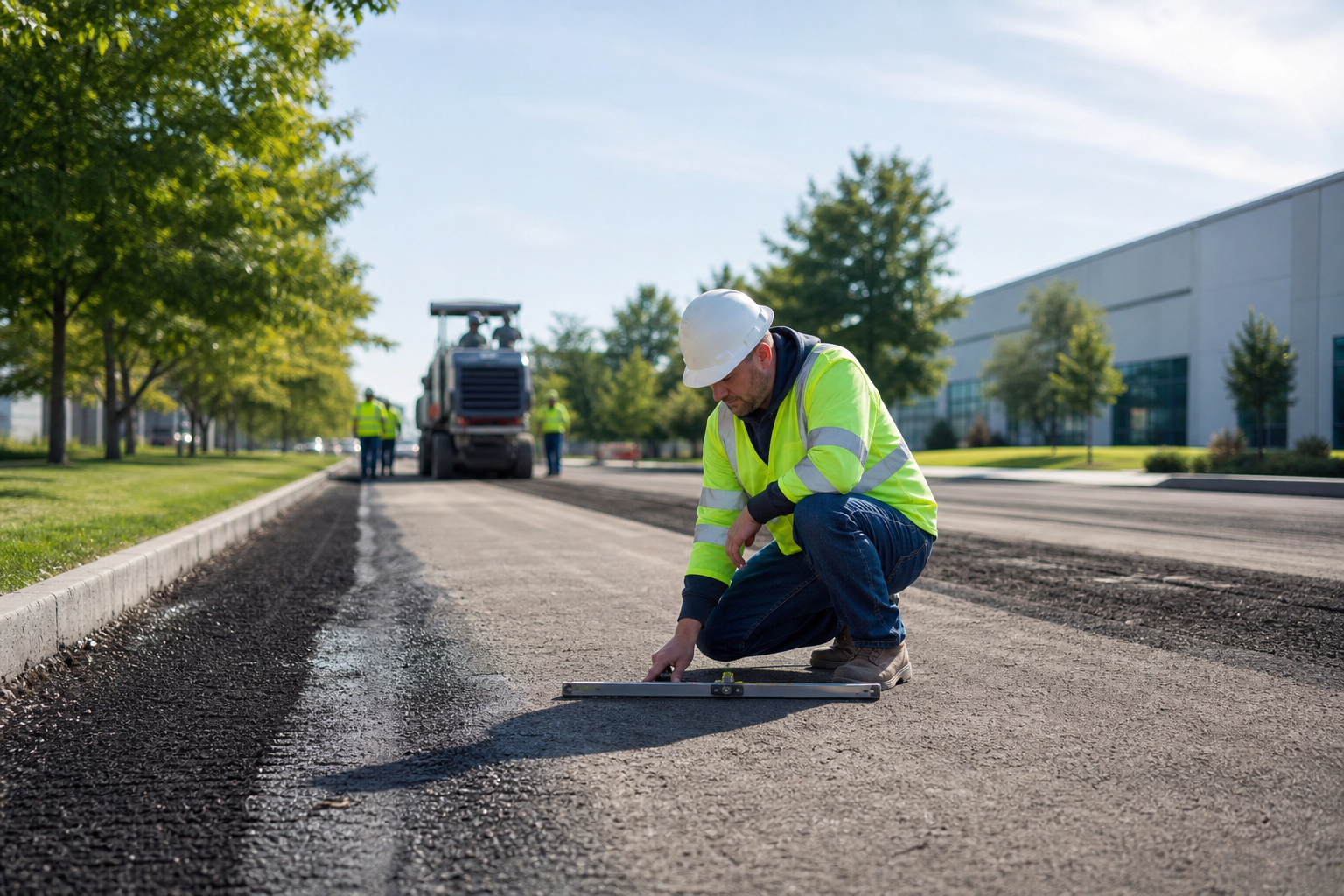
After milling, the surface should be broom-cleaned and swept so the texture is visible for grade checks and to provide a clean contact for the new overlay. Expect the contractor to perform profile checks and grade verification using a 3-point level or survey instruments, and to record any deviations from the specified tolerances. Industry practice is to capture before and after photos, measurement logs, and a written grade verification report for the owner or engineer (process steps) and (operational guide).
On GDOT or comparable projects, as-built documentation and submittals may be required. Confirm that your contractor will produce the necessary photos, daily reports, and any GIS as-built files the agency requires (DCBC LLC). Request a written acceptance procedure for the milled surface, including who signs off on grade checks and how discrepancies will be corrected before paving.
When milling is not appropriate and decision criteria for full-depth reconstruction
Do not choose milling when the structural layers are compromised. Field signs that indicate full-depth reconstruction is likely required include widespread alligator cracking that reflects base failure, pumping or saturated base materials, and pavement sections that are too thin to mill without exposing or damaging the base. Technical reports caution that applying a thin overlay over a failed base will not restore structural capacity and often leads to premature distress (FHWA report). Use test cores and a pavement condition survey to confirm whether a mill and overlay will meet your performance goals.
Contractor verification checklist and GDOT-specific items to request
When soliciting quotes and reviewing performance, request the following items in writing so you can compare bids on an apples-to-apples basis.
- Proof of contractor credentials and Georgia DOT certification where applicable, and a statement about the contractor’s GDOT experience (contractor profile).
- Detailed traffic control plan with phasing, signage, and pedestrian protection.
- Pre-milling survey, stakes, and test-core reports showing existing layer thickness and the proposed milling depth.
- Defined milling depth and profile tolerances, plus the method for field verification such as 3-point leveling or survey instrumentation (industry guidance).
- Material handling plan that states whether milled asphalt will be hauled off, stockpiled, or recycled and any testing or approvals needed for reuse (DOT guidance).
- Haul-route and staging plan that minimizes neighborhood impacts and documents truck hours and routes, and an equipment list if needed.
- Post-milling deliverables including sweep logs, grade verification reports, photos, and any as-built GIS submittals required by the agency or owner (DCBC LLC).
- Schedule and phasing with expected daily production rates and contingency steps if base defects are discovered.
Frequently asked questions
How long does an asphalt milling operation take for a typical commercial parking lot
Duration depends on lot size, depth, site access, and traffic control needs. A small to medium parking lot may be milled in one to two days of continuous operations, while larger or phased lots can take several days. The contractor should provide a per-day production estimate in the bid and a phasing plan that maintains customer access.
Will milling reduce noise and bumps immediately or is an overlay required right away
Milling removes surface irregularities, which can reduce bumps and improve ride quality, but milling alone leaves a textured profile. An overlay is usually placed soon after milling to restore a sealed riding surface and full noise reduction. The milled surface should be cleaned and verified for grade before overlay.
What happens to the reclaimed milled asphalt and can it be reused on my project
Reclaimed asphalt pavement can be recycled into new asphalt mixes or used as an aggregate base if testing and engineer approval confirm suitability. DOT manuals describe reuse options and testing requirements, so request the contractor’s reuse plan and any test reports before accepting recycled material (NCDOT manual).
What evidence should a Georgia public agency request to confirm GDOT-compliant milling work
Request the contractor’s GDOT certification, pre-milling test cores and survey, traffic control plan, written milling depth and tolerance plan, grade verification reports, and any as-built GIS or photo documentation required by the agency. Those items support inspection readiness and acceptance.
How do I know if my pavement needs milling or full-depth reconstruction
Ask for a pavement condition survey and test cores. If distress is limited to the surface and the base is sound, milling and overlay are effective. If cores show base failure, pumping, or widespread structural cracking, full-depth repair will likely be required (contractor guide) and (technical report).
Key takeaway: prepare for milling by confirming survey data, traffic control, milling depth and verification methods, and a clear plan for milled material. Those items reduce surprises and keep your project on schedule.
If you would like a quote or assistance preparing a milling specification, DCBC LLC can provide project planning, stakeout and grade calculations, and turnkey site work services. Visit DCBC LLC to request a quote.