


What are asphalt paving basics and why do they matter?
Asphalt paving basics describe the materials, mix choices, site preparation, and field practices that determine whether a paved surface performs as intended. Owners, developers, general contractors, and municipal or DOT teams should care because correct mixes, an engineered sub-base, proper compaction, and reliable drainage reduce cracking, rutting, and life-cycle cost. For turnkey paving, maintenance, or GDOT-ready documentation such as stakeout plans and as-built GIS submittals, DCBC LLC offers construction and virtual engineering services; learn more at DCBC LLC.
What is asphalt and what are its main components
In plain terms, asphalt pavement is a manufactured composite made of three primary elements: aggregates, a binder, and additives. Aggregates are crushed stone, sand, and gravel that provide structure. The binder, commonly called asphalt cement, coats and bonds the aggregates to form a cohesive mat. Additives and modifiers are used to control stiffness, temperature sensitivity, and resistance to aging. Knowing these components helps owners compare specifications instead of relying on brand names or vague descriptions. For a focused technical overview of composition and common additives, see Titan Pavement’s primer on asphalt basics (Understanding Asphalt and Its Paving Basics).
Common asphalt mix types and where each is used
Asphalt mixes are tailored to specific roles within a pavement section. The practical categories you will see in specifications and bids are:
- Surface course: A dense, finer-graded wearing layer designed to resist weathering and provide friction. Surface mixes matter most where skid resistance and aesthetics are priorities, such as parking lots, sidewalks adjacent lanes, and travel lanes.
- Binder course: A stronger intermediate layer that spreads loads to the base and adds overall structural capacity. The binder course reduces movement and helps protect the base from concentrated wheel loads.
- Base course: Coarser, more open-graded mixes placed above the sub-base to provide the primary structural capacity when the subgrade is weak or traffic is heavy.
Select mix types based on expected traffic, loading patterns, and local climate. When comparing bids, require contractors to list the specific mix designation or standard reference so you compare equivalent materials and performance levels.
Why sub-base preparation, drainage, and compaction determine pavement performance

A pavement’s lifespan depends heavily on what is beneath the asphalt. An engineered sub-base distributes loads, controls settlement, and reduces the risk of reflective cracking. Effective drainage keeps water out of the subgrade, preventing softening and loss of support. Compaction locks aggregates and asphalt into a dense structure that resists deformation. For residential examples, This Old House highlights the value of a compacted crushed-stone sub-base and explains typical hot-mix placement practice; the guide notes a common recommendation of an 8-inch crushed-stone sub-base for driveways in many contexts (How To Build and Maintain an Asphalt Driveway).
On commercial or DOT projects, the sub-base and drainage requirements are usually engineered. Geotechnical recommendations, aggregate specifications, and a drainage plan should be part of the contract documents for any pavement expected to carry sustained or heavy traffic.
Field practices that affect quality: laydown temperature, equipment, and compaction
The way asphalt is handled on-site often matters more than small differences in material formulation. Owners should confirm that specifications and preconstruction meetings address these items and that the contractor documents compliance during the work. Key field practices include material temperature control, immediate compaction, appropriate equipment selection, and grade verification.
Typical field details to watch for
- Laydown temperature: Hot-mix asphalt must be delivered and placed within the producer’s recommended temperature range. Heat affects workability and density; poorly heated material reduces compaction efficiency. Industry guidance often cites high production temperatures for hot-mix asphalt; for example, common field descriptions mention placement of hot mix near manufacturer-recommended temperatures for proper compaction and finish (This Old House on laydown and compaction).
- Immediate compaction and roller strategy: Compaction should begin directly behind the paver with the correct sequence of rollers and documented roller passes. Proper compaction reduces air voids and increases density, lowering the risk of early rutting and moisture infiltration.
- Equipment and operator skill: Paver type, screed settings, and roller selection matter. Experienced operators manage head-of-mix, joints, and longitudinal smoothness to meet grade and smoothness requirements.
- Grade and smoothness control: Accurate grade control prevents ponding and ensures uniform pavement thickness. Use of stakeout plans, grade calculations, and continuous verification helps avoid rework and ensures drainage performance.
Ask bidders to include the contractor’s quality control procedures in proposals: how they monitor laydown temperature, document compaction efforts, and verify grades on the day of paving.
Routine maintenance that extends pavement life: sealcoating and striping
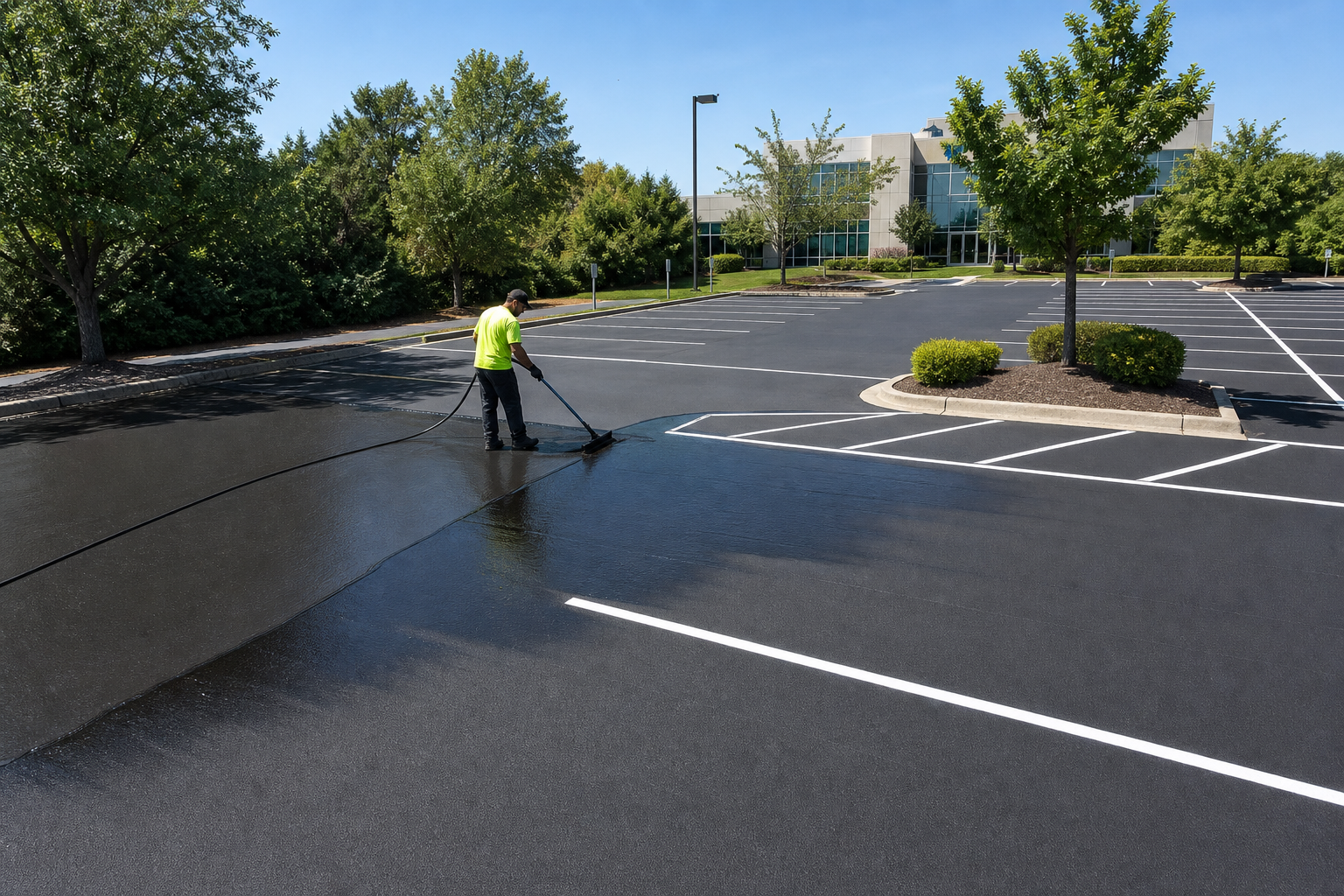
Planned maintenance preserves structural value and reduces long-term costs. Practical maintenance actions include prompt crack sealing to prevent water infiltration, periodic sealcoating to slow oxidation of the surface binder, and timely striping to maintain safety, ADA compliance, and traffic flow. Sealcoating and striping schedules should be based on traffic exposure and condition assessments rather than arbitrary calendar dates. Including a staged maintenance plan in the contract or as part of project management makes budgeting and scheduling straightforward.
What GDOT certification means for Georgia projects
For public work or projects that touch state rights-of-way, a Georgia DOT certified contractor can simplify compliance and inspections. Certification indicates knowledge of GDOT specifications, accepted testing procedures, and required as-built deliverables. If your project requires GDOT as-built GIS submittals, verified grade calculations, or inspection-ready documentation, confirm that the contractor lists these services and has prior experience delivering them. DCBC LLC lists Georgia DOT certification and virtual engineering services on its site to support DOT-adjacent work (DCBC LLC).
How to use these basics to get accurate quotes, documentation, and GDOT-ready deliverables
When soliciting bids, a concise checklist keeps evaluations objective and reduces surprises during construction. Require bidders to confirm the following in writing:
- Specific mix designations and applicable standard references instead of generic mix names.
- Engineered sub-base design or explicit geotechnical assumptions for the site.
- Compaction targets and the test method to be used for verification and reporting.
- Expected laydown temperature ranges, roller types, and documented quality-control procedures.
- Drainage details that prevent standing water and protect the subgrade.
- Deliverables required at closeout: stakeout plans, grade calculations, compaction reports, and GDOT as-built GIS submittals when applicable.
- A maintenance recommendation including crack sealing, sealcoating, and striping intervals tied to traffic use.
A common cost-saving mistake is selecting the lowest bid without confirming these items. For commercial and public projects, a hybrid contractor that provides both field execution and virtual engineering packages reduces coordination errors and accelerates closeout documentation.
Next steps and where to get help
If you are planning paving work or need GDOT-ready documentation, gather your program requirements and a site plan, then ask prospective contractors to confirm mix designations, sub-base assumptions, compaction tests, and deliverables. For turnkey paving, sealcoating, striping, or virtual engineering services such as stakeout plans and GDOT as-built GIS submittals, contact DCBC LLC or request a quote through the company website. DCBC offers combined field and virtual services that are convenient for owners who prefer a single point of responsibility.
Frequently asked questions
How long will my asphalt pavement last and what affects that lifespan?
Pavement life depends on design layer thickness, material selection, subgrade quality, drainage, traffic loading, and maintenance. Properly engineered sub-bases, compaction to specified density, timely crack repairs, and scheduled sealcoating all extend service life. Discuss expected performance and a maintenance schedule with your contractor during bidding and closeout.
How thick should the sub-base be for a commercial parking lot compared with a residential driveway?
Thickness depends on soil strength and expected loads. Residential driveways commonly use thinner crushed-stone bases than commercial lots that receive heavier traffic. This Old House notes an 8-inch crushed-stone base as a typical residential guideline in many situations; commercial projects generally require engineered recommendations tailored to site conditions (This Old House).
Which asphalt mix should I specify for a parking lot versus a roadway?
Parking lots prioritize durable surface mixes with adequate friction for turning, pedestrian safety, and aesthetics. Roadways often require a layered design with binder and base courses to carry concentrated wheel loads over time. Ask bidders to specify exact mix names and the traffic design assumptions used to develop the pavement section.
What does Georgia DOT certification mean for selecting a paving contractor?
GDOT certification indicates a contractor is familiar with state specifications, test procedures, and submittal formats. For state-funded, municipal, or DOT-adjacent projects, certification reduces administrative friction and increases the likelihood of inspection-ready deliverables.
When should I schedule sealcoating and striping after new asphalt is installed?
Striping should be scheduled after the surface has sufficiently cooled and cured; the exact interval depends on pavement temperature and ambient conditions. Sealcoating is performed later based on initial oxidation and traffic exposure. Ask your contractor for timing recommendations specific to your local climate and use patterns.
For tailored assistance with paving specifications, compaction plans, stakeout and grade documentation, or to request a quote for turnkey delivery, contact DCBC LLC or use the Request a Quote form on the website.