


7 red flags when hiring a Georgia DOT certified contractor
How to use this checklist
This article lists seven specific red flags you can use during procurement, prequalification, or bid evaluation. Read each numbered item, then request the exact documents or answers shown under “What to request.” If more than two red flags apply to a single bidder, pause the procurement and require clarifying documentation. Owners, procurement officers, and engineers should record every verification item in the procurement file.
When to stop a procurement
Stop the award if a bidder cannot produce core compliance documents such as GDOT prequalification, insurance certificates, or three verifiable public project references. GDOT and local agencies treat missing documentation as a material eligibility issue for federally-funded or state projects, so document every refusal to provide required records.
Who should request documents
The contracting owner, project engineer, or designated procurement officer should request documents in writing. Save emails, attachments, and a short verification memo that lists the items inspected and the source used to verify each claim.
1. Missing or unverifiable GDOT prequalification or registration
Red flag: the contractor claims to be “GDOT certified” but cannot show a valid prequalification packet, a GDOT registration number, or the DOT cover letters used for prime or subcontractor submissions. GDOT maintains formal prequalification and registration processes, and public agencies routinely require the paperwork before awarding DOT-style work, especially on federal-aid projects.
Why it matters: Without verifiable prequalification the contractor may be ineligible for state or federally funded work, and the owner could face compliance or funding issues when the contractor performs DOT-style scope. GDOT prequalification also documents experience and references that affect a bidder’s eligibility.
What to request:
- GDOT prequalification packet or registration number, plus copies of DOT forms referenced in the prime cover letter checklist: GDOT Prime Contractor Coverletter checklist.
- If the firm expects to act as a subcontractor, request the GDOT subcontractor application items and supporting reference letters: GDOT Subcontractor checklist.
- Confirm understanding of Local Administered Project (LAP) stewardship requirements where applicable: GDOT LAP guidance.
2. Incomplete insurance, bonding, or financial documentation
Red flag: the bidder provides vague insurance statements, omits a current certificate of insurance, lacks a performance bond, or refuses to share a recent financial statement. GDOT prequalification and most public owners require proof of insurance, specified bond amounts, and financial information during prequalification.
Why it matters: Inadequate insurance or bonding transfers risk to the owner, delays closeout if claims arise, and can disqualify a firm from federal-aid projects. Confirming tax and registration compliance is also part of responsible procurement: see Georgia Department of Revenue guidance on contractor definitions and obligations for context.
What to request:
- Certificate of Insurance (COI) naming the owner as an additional insured and showing current policy limits.
- Performance and payment bonds or a bond rider for the project amount where required, with surety contact information.
- Recent contractor financial statement or DOT-required financial forms, and proof of workers’ compensation coverage where applicable. For state tax and registration context, consult: Georgia Department of Revenue contractor guidance.
3. Unable to produce recent GDOT or similar public project references

Red flag: the contractor cannot provide three recent, verifiable public or DOT-style project references, or gives references that are not reachable. GDOT prequalification and subcontractor registration materials require past project performance evidence, and DOT projects commonly ask for contactable reference letters or project IDs.
Why it matters: Roadway, stormwater, and sitework projects have technical and schedule risks that only experienced firms demonstrate. References confirm the bidder’s experience with similar scopes and with DOT inspection regimes.
What to request:
- Three recent project references with contact names, phone numbers, project descriptions, and the owner or agency project ID where applicable.
- Performance letters or completion documentation for any GDOT or federally funded work, and a short list of staff who performed the work with their roles.
4. No clear stormwater, erosion control, or permit compliance plan
Red flag: the bidder treats erosion control and stormwater as an add-on, cannot produce a Sediment and Erosion Control plan, or has no record of obtaining required permits. Local agencies and GDOT expect contractors to follow permit conditions and to implement erosion control plans during construction.
Why it matters: Noncompliance can stop work, trigger fines, cause rework, and require corrective measures that increase cost and schedule exposure for the owner. Owners must confirm a contractor’s practical experience with in-place controls and permit reporting.
What to request:
- Copies of erosion and sediment control plans, NPDES or local stormwater permits, and the contractor’s erosion-control inspection checklist for the project.
- Proof of previous projects with installed silt fence, inlet protection, and final stabilization, plus contact information for the permitting authority that approved those plans.
5. Refusal or inability to provide stakeout plans, grade calculations, or GDOT as-built GIS deliverables
Red flag: the bidder refuses to commit to producing stakeout plans, 3-point level verification, roadway grade calculations, or GDOT-compliant as-built GIS submittals at project closeout. Contractors that combine field work with virtual engineering services should deliver these items as part of contract closeout; DCBC LLC lists GDOT as-built GIS submittals and stakeout plans among its services.
Why it matters: Accurate stakeout and as-built deliverables are essential for inspections, future maintenance, and any warranty or claims process. Without them, owners cannot prove as-built grades, drainage inverts, or pavement quantities.
What to request:
- A sample stakeout plan, typical 3-point level verification sheet, and a statement of deliverables for GDOT as-built GIS files required at closeout.
- Contract language that defines acceptable file formats, delivery dates, and review milestones for as-built and GIS submittals.
If the contractor lists virtual services on their site, ask for a recent sample deliverable and the staff who prepared it so you can confirm competence during bid evaluation.
6. Limited equipment, undisclosed subcontractor reliance, or lack of key trades on payroll
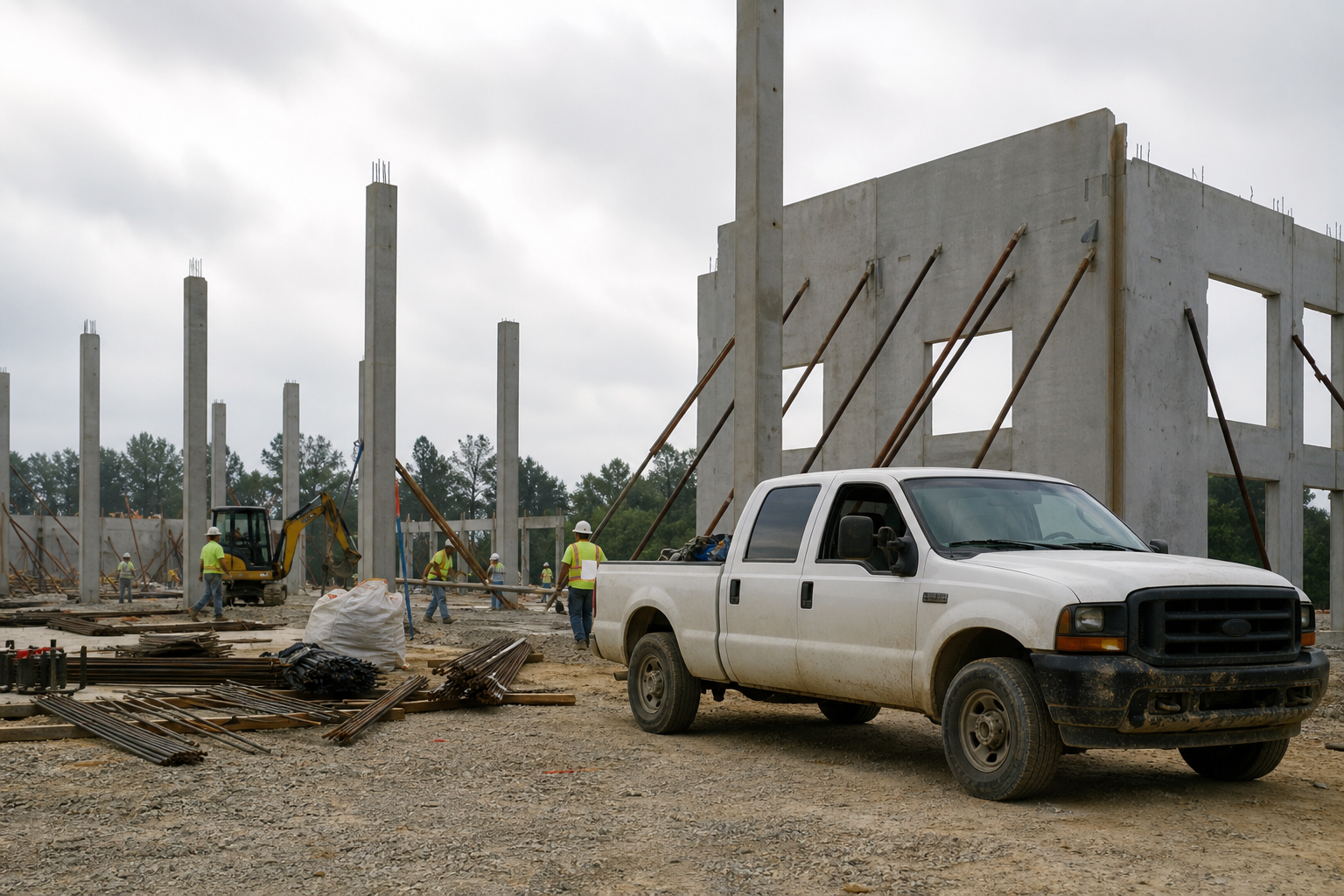
Red flag: the prime contractor lacks critical equipment or is unwilling to disclose subcontractors who will perform core scope items. GDOT prequalification materials ask for subcontractor lists and proof of capability because projects require on-site resources and accountable trade partners.
Why it matters: Overreliance on unvetted subs or lack of equipment leads to schedule delays, inconsistent quality, and unclear responsibility in the event of defects. Verify that the prime can furnish or control the necessary equipment, and confirm the availability of key trades such as asphalt crews, grading teams, and pipe installers.
What to request:
- A current equipment list showing ownership or long-term lease status for major items, and the names of subcontractors who will perform more than ten percent of the work.
- Signed subcontractor agreements or letters of intent, references for each subcontractor, and key personnel resumes for on-site foremen.
- When applicable, verify specific equipment examples such as dump trucks, rollers, or milling rigs. If the bid depends on heavy haul or aggregate movement, request proof of access to dump truck capacity and any rental agreements from the bidder. See the contractor’s equipment or rental offerings on their site for context: dump truck.
7. Opaque pricing, refusal to provide detailed estimates, or hostile change-order behavior
Red flag: the bidder offers a single lump-sum number without a transparent takeoff, refuses to provide unit prices, or suggests change orders will be handled informally. On civil site and roadway projects you need detailed quantity takeoffs, unit pricing, and a documented change-order process to limit scope creep and disputes.
Why it matters: Opaque pricing hides assumptions and makes it difficult to validate quantities or to hold the contractor accountable for performance. A history of adversarial change orders suggests potential for cost escalation mid-project.
What to request:
- A detailed estimate or takeoff that lists unit quantities and unit prices, allowances, mobilization line items, and contingency assumptions.
- A published change-order procedure with required approvals, pricing rules, and an example of a previous executed change order for a similar project.
- Where appropriate, require a guaranteed maximum price or escrowed retainage if you observe pricing opacity or if the project is high risk.
Next step: documents to request today
Request the following items from every bidder before award and attach them to the procurement record: GDOT prequalification/registration packet or number, COI and bond documentation, three verifiable public project references, erosion control and stormwater permit documents, sample stakeout and GDOT as-built GIS deliverables, a current equipment and subcontractor list, and a detailed takeoff with unit pricing. If a bidder refuses to provide any of these, treat that refusal as a material red flag and seek an alternative qualified bidder.
For GDOT-specific prequalification and checklist items, consult the GDOT Prime Contractor Coverletter checklist and the GDOT Subcontractor checklist linked above. For LAP stewardship expectations, see GDOT’s Local Administered Project guidance. For state contractor tax and registration definitions, refer to the Georgia Department of Revenue contractor guidance, and to verify licenses and insurance consult Georgia consumer guidance on contractor verification: How to verify licensed and insured contractors.
Frequently asked questions
How do I verify that a contractor is actually GDOT prequalified or registered?
Ask for the contractor’s GDOT prequalification packet, the registration number, and copies of the DOT forms included in the prime or subcontractor coverletter checklists, then confirm the details against the GDOT procedures and documentation requirements.
What documents should I require before awarding a roadway or DOT-style site work contract?
Require GDOT prequalification or registration documentation where applicable, COIs, performance and payment bonds, three verifiable public project references, erosion control and permit documents, as-built and stakeout deliverables, an equipment and subcontractor list, and a detailed estimate with unit pricing.
Can a GDOT-certified prime use subcontractors on a project and how should I vet them?
Yes, primes commonly use subcontractors. Require a disclosed subcontractor list, signed subagreements for major trades, references for each subcontractor, and evidence that the prime will maintain responsibility and insurance coverage for subcontracted work. Review the GDOT subcontractor checklist guidance for required submission items.
What should an acceptable as-built or GDOT as-built GIS submittal include?
An acceptable submittal should include coordinate-accurate files in the requested GIS or CAD format, final grade and invert elevations, utility inverts and locations, pavement limits and thicknesses, and any GDOT-specific attribute tables required for as-built GIS. Request a sample deliverable and the acceptance criteria before award.
Final note and contact
If you want a single-source partner that combines field civil site work with virtual deliverables such as stakeout plans and GDOT as-built GIS submittals, consider requesting a quote from DCBC LLC for review and verification. Visit DCBC LLC to request a quote or to review services and sample deliverables.